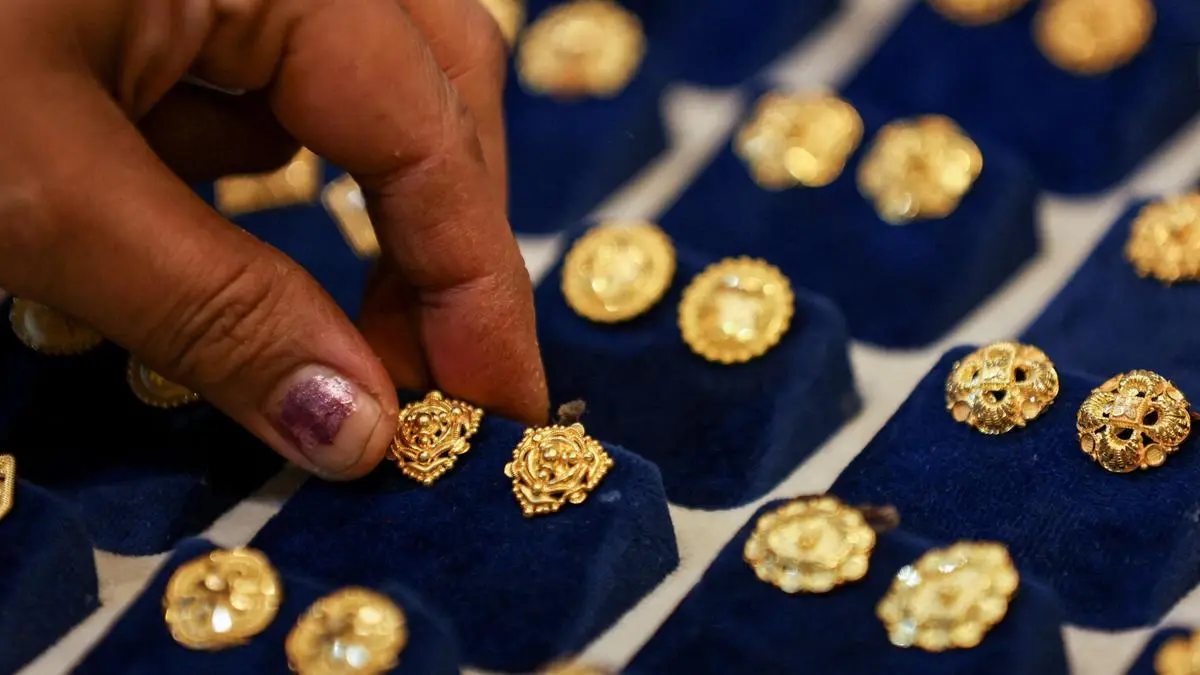

Jewellery demand plunged 15 per cent to 75 tonnes against 89 tonnes, but in value terms it jumped 34 per cent to ₹1.13 lakh crore (₹84,200 crore).
| Photo Credit:
REUTERS/ANUSHREE FADNAVIS
India’s gold demand in the June quarter dipped 6 per cent to 131 tonnes as volatile prices forced consumers to postpone their jewellery purchases.
However, demand for in terms of value was up 50 per cent to ₹1.98 lakh crore against ₹1.32 lakh crore logged in the same period last year, according to the Gold Demand Trend report released by World Gold Council on Thursday.
Jewellery demand plunged 15 per cent to 75 tonnes against 89 tonnes, but in value terms it jumped 34 per cent to ₹1.13 lakh crore (₹84,200 crore).
Interestingly, bars ad coins demand increased 9 per cent to 50 tonnes (46 tonnes) and in value it was worth ₹75,700 crore (₹43,700 crore).
ETFs up 62%
Exchange traded funds rose 62 per cent y-on-y in June quarter to 4 tonnes (2 tonnes) even as it was down 82 per cent sequentially compared to 20 tonnes logged in the March quarter.
Sachin Jain, Regional CEO-India, World Gold Council, said while the demand has fallen in terms of tonnage, it is still higher in value terms which actually means consumers are buying gold as per their budget with falling prices from their high in the last few months.
Moreover, he said Prime Minister Narendra Modi’s call to cut down on gold purchases had its impact on softening demand, he added.
Despite the recent fall, gold prices are still higher by 59 per cent at ₹1.51 lakh per 10 gram against ₹94,877 logged in the same period last year, he said.
Second-lowest Q2 demand
Notwithstanding the strong sales during Akshaya Tritiya, jewellery demand dropped to the second-lowest Q2 in the quarterly data series since 2000. Demand weakened from mid-quarter as the month-long inauspicious period (mid-May to mid-June) and levy of 9 per cent import duty hike.
The steady store expansion amid falling demand led to an increase in inventory levels at the jewellers’ end. It touched a high of 21 tonnes in Q2 well above the 13-year average of 15 tonnes.
Though RBI gold holdings remained steady at 880 tonnes since mid-2025, the share of gold in total reserves has risen from 12 per cent to 16 per cent, driven by the 70 per cent rise in gold prices.
Gold supply fell to six-year low of 120 tonnes in the June quarter and was well below the 16-year average of 234 tonnes. Net bullion imports, which dominate the supply mix, declined to 98 tonnes, down 22 per cent year-on-year.
Despite the decline, supply remained adequate to meet prevailing demand, supported by elevated industry inventories and the availability of recycled gold.
Net recycling (exchange of gold for cash) remained subdued in Q2, with volumes falling to 19 tonnes, down 17 per cent y-on-y, the lowest level in eleven quarters.
Despite domestic gold prices being about 60 per cent higher y-on-y, consumers showed limited appetite to sell, preferring to monetise their gold holdings through gold loan rather than liquidate them, said WGC.
Rising grey markets
Meanwhile, according to a Reuters report, India is also seeing a rise in unofficial gold inflows since the government raised import tariffs on the precious metal earlier this year, widening margins for grey-market operators and hurting organised players, the World Gold Council said.
India more than doubled import tariffs to 15 per cent on May 13 to curb demand, cut the trade deficit and ease pressure on the rupee.
“The arbitrage is so huge. I mean, with the 15 per cent duty and 3 per cent GST, there’s an 18% difference, and that almost spurs an entire industry,” said Jain. Grey market inflows and the disruption they cause are hurting organised players, he said.
Published on July 30, 2026