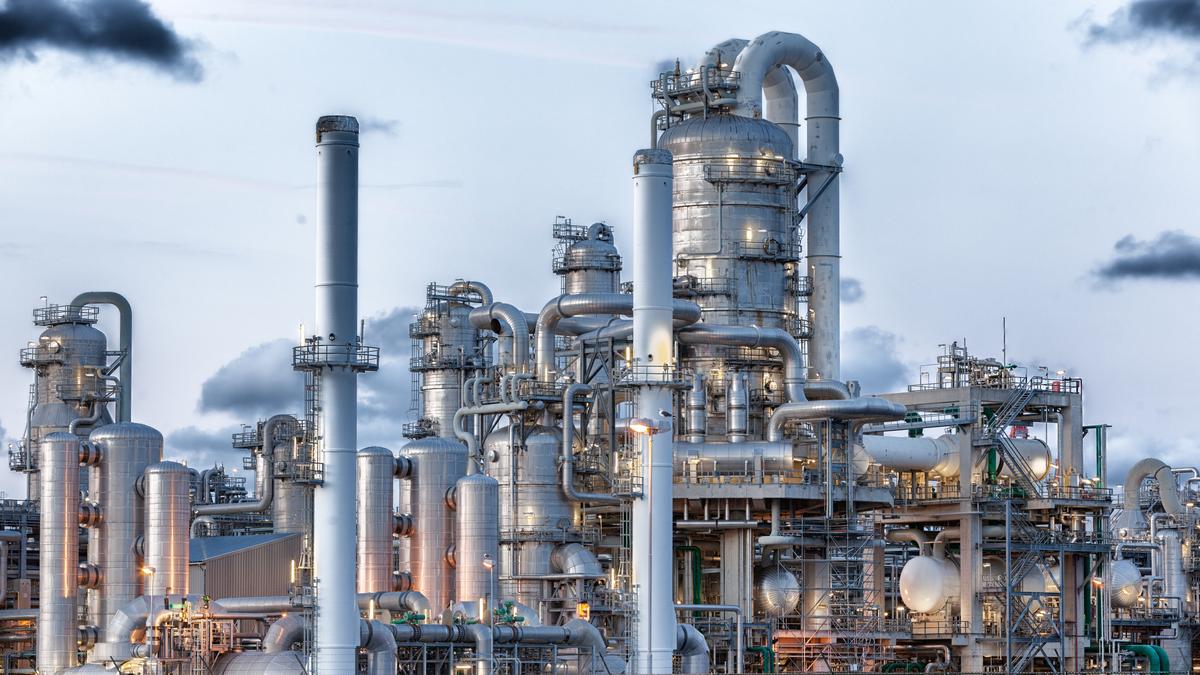
Refiners plan to resume buying Iranian oil while refiners elsewhere in Asia are examining such a move after Washington temporarily removed sanctions to alleviate an energy crunch caused by the U.S.-Israeli war on Iran, traders said. Image used for representation purpose only.
| Photo Credit: Getty Images/iStockphoto
Refiners plan to resume buying Iranian oil while refiners elsewhere in Asia are examining such a move after Washington temporarily removed sanctions to alleviate an energy crunch caused by the U.S.-Israeli war on Iran, traders said on Saturday (March 21, 2026).
Three Indian refining sources said they will buy Iranian oil and are awaiting government directions and clarity from Washington on details such as payment terms.
Refiners in India, which has much smaller crude stockpiles than other big Asian oil importers, rushed to book Russian oil after the U.S. recently lifted sanctions temporarily. The Indian government could not be immediately reached for comment outside office hours.
Other Asian refiners are making checks to see if they can purchase the oil, several people with knowledge of the matter said.
The Trump administration on Friday issued a 30-day sanctions waiver for the purchase of Iranian oil already at sea, U.S. Treasury Secretary Scott Bessent said.

The waiver applies to oil loaded on any vessel, including sanctioned tankers, on or before March 20 and discharged by April 19, according to the Office of Foreign Assets Control. It is the third time the U.S. has temporarily waived sanctions on oil since the start of the war.
Unlocking millions of barrels of oil
About 170 million barrels of Iranian crude are at sea, said Emmanuel Belostrino, Kpler’s senior manager for crude oil market data, on ships scattered from the Middle East Gulf to the waters near China.
Consultancy Energy Aspects on March 19 estimated 130 million to 140 million barrels of Iranian oil on water, equivalent to less than 14 days of current Middle East production losses.
Asia relies on the Middle East for 60% of its crude supply and the near-closure of the Strait of Hormuz this month is forcing refineries across the region to run at lower rates and cut fuel exports.

Trump re-imposed sanctions on Iran in 2018 over its nuclear programme. Since then, China has become Iran’s main client with its independent refiners buying 1.38 million barrels per day (bpd) last year, Kpler data showed, attracted by deep discounts as most countries shunned the crude due to the sanctions.
Other issues complicate buying
Potential complications for buying Iranian oil include uncertainty over how to pay for it and the fact that a large share of it is aboard aging shadow fleet ships, traders said.
Also, some former purchasers of Iranian oil were contractually obligated to buy from National Iranian Oil Co., two refining sources said. However, since the U.S. re-imposed sanctions in late 2018, Iranian oil has been sold in significant part by third-party traders.
“It usually takes some time to work through compliance, administration and banking, etc., but I guess people will try to work ASAP,” a Singapore-based trader said.
The sources declined to be named due to company policy.
Other than China, major buyers of Iranian crude before sanctions were re-imposed included India, South Korea, Japan, Italy, Greece, Taiwan and Turkey.
Published – March 21, 2026 11:25 am IST