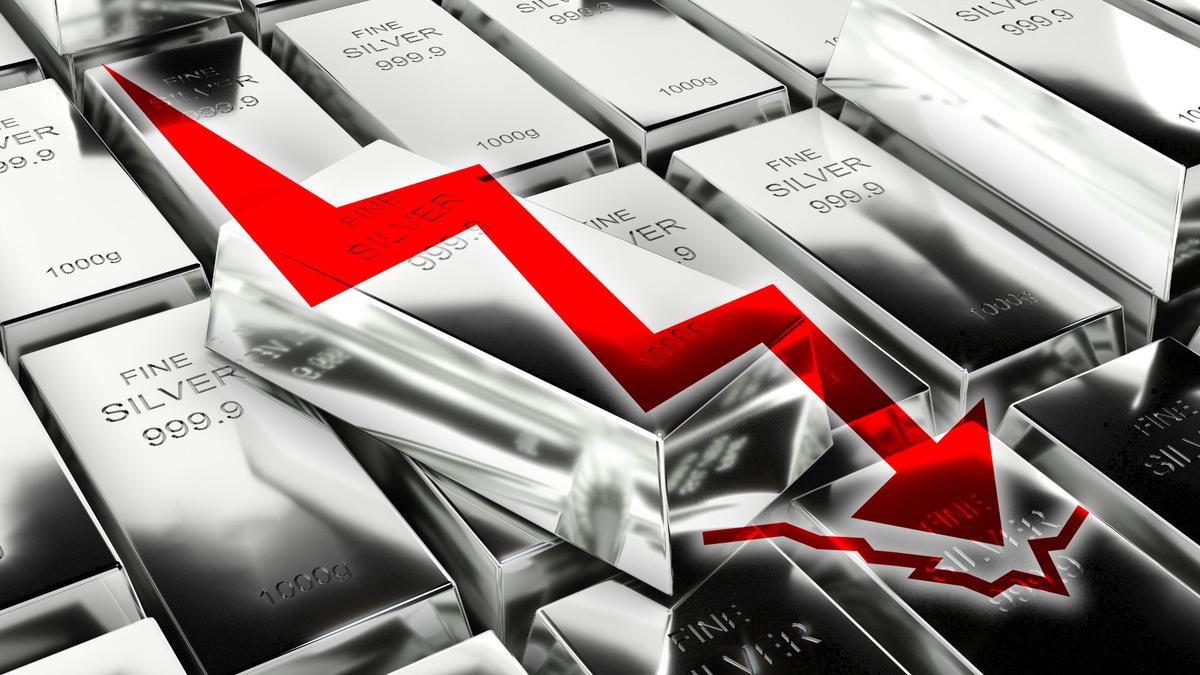
Silver endured extreme volatility on Friday, plunging nearly 40 per cent from record highs above $118-$121 per ounce to around $74-$85, triggering lower circuit limits across all Silver Exchange Traded Funds (ETFs) in India.
On the Multi Commodity Exchange (MCX), silver corrected aggressively from peaks near ₹4,20,048 per kilogram to around ₹2,91,000-₹2,91,925.
“Due to the sharp decline in silver prices, with silver futures on MCX hitting lower circuit levels amid global commodity sell-off and profit-booking, all Silver ETFs across various mutual fund houses are likely to open at the lower circuit on the stock exchanges,” according to a market advisory sent to investors.
As per exchange rules, ETFs have a circuit limit of 20 per cent based on the previous trading day’s closing price.
The dramatic selloff came after President Trump’s nomination of Kevin Warsh as the next Federal Reserve Chair. Warsh, known for his hawkish stance on inflation, prompted a strengthening US dollar and rising real yields, triggering liquidation of leveraged positions across precious metals.
Kaynat Chainwala, AVP – Commodity Research at Kotak Securities, noted that “silver has corrected more sharply than gold, which is typical following outsized gains given its higher volatility and exposure to industrial demand.” She identified strong support in the $95-$102 range.
Nikunj Saraf, CEO of Choice Wealth, highlighted that silver had hit ₹4,20,048 per kg on Thursday before the crash. Indian ETFs like Nippon India Silver plunged 14 per cent in a single day, mirroring the global selloff where spot silver fell 5.7 per cent to $109.55 per ounce.

Rajkumar Subramanian, Head – Product & Family Office at PL Wealth, noted that silver had exhibited a remarkable rally over the past year, rising from around ₹1.5-1.6 lakh per kg in early 2025 to above ₹4 lakh per kg by late January 2026, implying a 165-170 per cent gain.
“However, silver remains a volatile metal, with historical annualized volatility often in the 25-35 per cent range, higher than gold, and the sharp run-up increases the risk of near-term corrections,” he said.
Ponmudi R, CEO of Enrich Money, characterized the correction as “a leverage flush, sentiment reset, and tactical adjustment rather than a trend reversal.”
He identified critical support at $74-$70, aligning with the 50-day EMA, and noted that stability above this base could facilitate a rebound toward $82-$92-$100+. On MCX, he placed stronger support around ₹2,51,000-₹2,52,000.
Despite the sharp decline, analysts maintain that structural drivers remain intact, including persistent supply deficits and surging industrial demand from green energy, electric vehicles, AI, electronics, and solar sectors. The medium-term outlook remains constructive, though near-term volatility is expected to persist.
Published on February 1, 2026