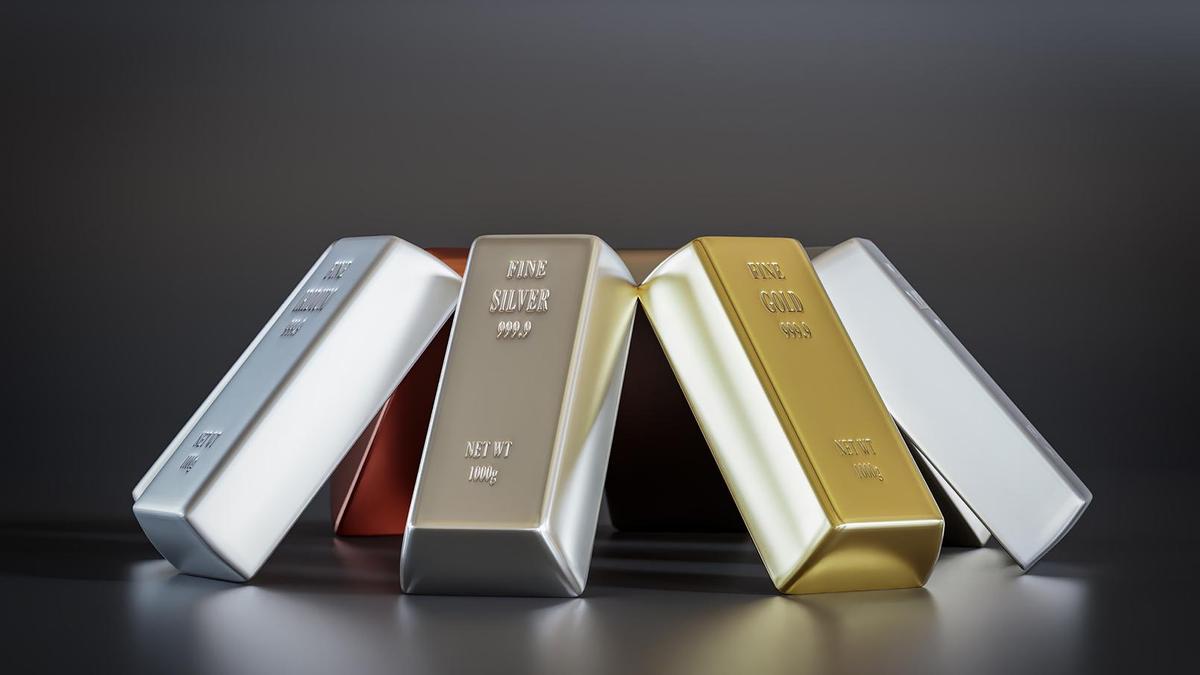
Gold climbed more than 50% this year and broke through key levels in 2025. Silver and platinum have also hit record highs.
| Photo Credit: Getty Images
As 2025 draws to a close, gold has been one of the standout performers in global markets, hitting repeated record highs amid safe‑haven demand and expectations of U.S. interest rate cuts. The bullion climbed above $4,400 per ounce this year as geopolitical tensions and economic uncertainty drove investors toward the metal, resulting in one of the largest annual gains since the late 1970s.
Gold climbed more than 50% this year and broke through key levels in 2025. Silver and platinum have also hit record highs alongside bullion, underscoring strong investor interest in hard assets as global markets grapple with volatility.
From $2,600 to $4,500: gold’s historic run
Gold prices climbed from around $2,625 per ounce in January to break above $3,000 in March as investors sought safety amid economic uncertainty driven by U.S. tariff tensions and trade‑war fears. Spot bullion later rallied through the longest U.S. government shutdown, which began on October 1 and paused key data releases, helping push prices past the $4,000 per ounce mark. In December, the metal extended its gains above $4,500 an ounce as escalating geopolitical tensions between the United States and Venezuela further boosted its appeal as a haven asset.
The de-dollarisation push
According to a JPMorgan research, de-dollarisation is unfolding in central bank forex reserves, where the share of U.S. dollar has slid to a two-decade low. A big part of the move away from the U.S. dollar in foreign exchange reserves has been the rising demand for gold. Many central banks, especially in emerging markets like China, Russia and Turkey, have been buying more gold to diversify away from heavily indebted fiat currencies. While gold still makes up a relatively small part of reserves in these countries (about 9%), that is more than double what it was ten years ago. This growing demand from central banks has helped support the current bull market in gold.
Gold share in India’s forex reserves jumps
India’s foreign exchange reserves stood at $693.318 billion for the week ended December 19, 2025, of which gold reserves accounted for $110.365 billion. Gold’s share in the Reserve Bank of India’s (RBI) total forex reserves increased from around 10% at December 2024 to 15.92% as of December 19, 2025. Gold imports during April–November 2025 rose by 3.3% year-on-year to $45.26 billion, compared with $43.8 billion in the corresponding period last year, according to data from the Commerce Ministry.
Meanwhile, demand for gold as an investment remains strong, especially for bars and coins. This shift towards investment buying is visible in gold import volumes, which increased sharply to 340 trillion between July and October, compared with 204 trillion between January and June 2025, as per World Gold Council.
WIll gold surpass $5,000/oz in 2026?
A JPMorgan report forecasts the 2026 and 2027 outlook for the metal to remain bullish. Prices are expected to push toward $5,000 per ounce by the fourth quarter of 2026, with $6,000 per ounce a possibility longer term. The report also says that gold ETFs could keep drawing investor money in the coming months because many expect the Federal Reserve to start easing policy. This trend supports gold prices.
Historically, when the Fed begins cutting interest rates, gold may dip briefly and trade sideways for two to three months after the first cut, but prices usually begin rising again from around the fourth month onward.
Published – January 01, 2026 11:39 am IST