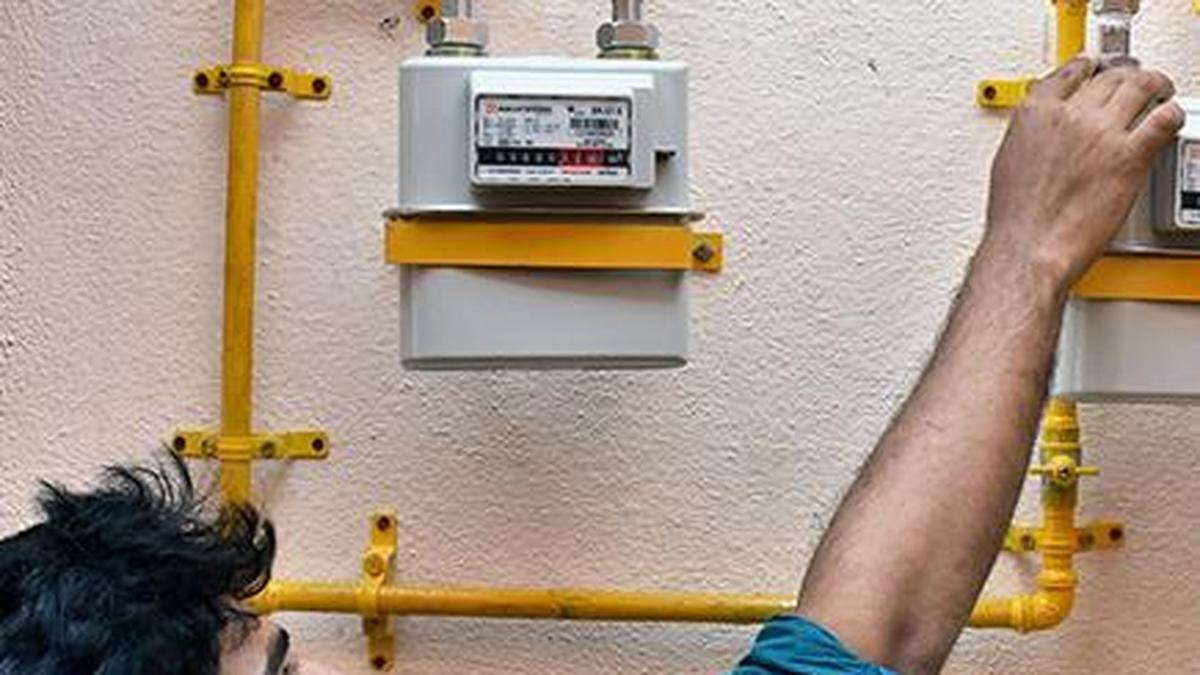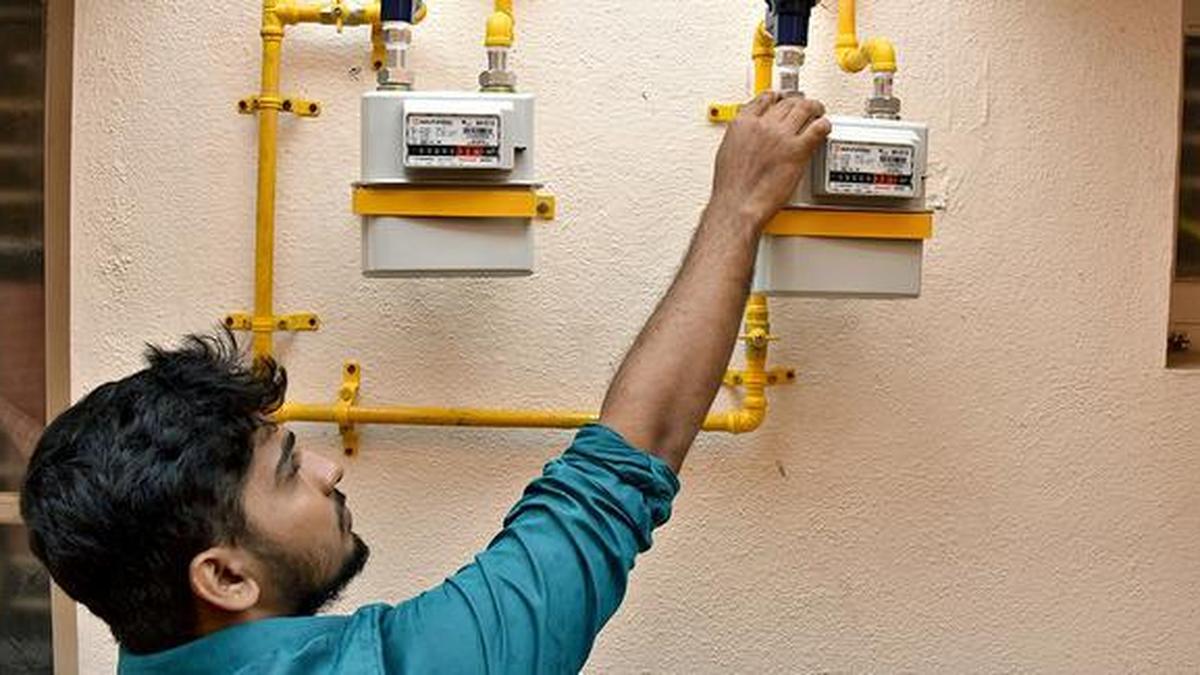
The Ministry’s push for expanding piped natural gas (PNG) is aimed at easing some of the pressure from liquified petroleum gas (LPG), supplies of which have been affected amidst the ongoing tensions in West Asia. File image for representation only.
| Photo Credit: The Hindu
Seeking to accelerate the push for piped natural gas (PNG), the Ministry of Petroleum and Natural Gas (MoPNG), late on Tuesday (March 24, 2026), invoking the Essential Commodities Act (ECA), instituted reforms to ease provisions towards expanding piped gas network — both domestic and commercial.
The Ministry underlined the reforms were aimed at “addressing delays in approvals and access to land, and enabling faster development of natural gas infrastructure, including in residential areas”, alongside instituting an investor-friendly network and improving last-mile connectivity.
Further, they seek to reduce “compliance burden” through simplified procedures and clearer documentation requirements.
The Ministry’s push for expanding piped natural gas (PNG) is aimed at easing some of the pressure from liquified petroleum gas (LPG), supplies of which have been affected amidst the ongoing tensions in West Asia.
However, as underlined by officials during the daily inter-ministerial briefings about the ongoing conflict, current domestic production of LPG is accounting for 50-60% of consumption requirements.
Also Read | India’s LPG crisis
The larger push for PNG
In fact, in the recent past, to cushion commercial establishments and enable an incentivised transition to piped gas, the Ministry accorded additional commercial cylinder allocation of up to 50%, which is inclusive of a 10% quantum conditioned on States and Union Territories working to advance the piped gas network. CGDs also sought to provide incentives as free gas up to ₹500 and/or waiving off security and registration charges for domestic consumers.
Further, essential to note, The Hindu learnt from senior officials that India has the potential to add 15 lakh new PNG connection in the next two weeks. They stated that addressing last-mile connectivity amidst unfavourable city infrastructure in certain areas was among the major hurdles which is being expeditiously addressed amidst the recent push.
Iran-Israel war: Follow LIVE updates on March 25, 2026
Clearer timelines, procedures
The directive underlines specific timelines, ranging from ten days — for laying steel pipes or PE pipes, to sixty days for laying pipeline of steel pipelines of more than 20 inches in diameter and for a distance beyond 10 km.
Additionally, in public areas that are not housing areas, the gazette seeks that if the concerned entity (that could be the central govt, state govt or urban authorities) neither rejects nor grants permission for laying of pipelines within stipulated timelines, the application would be “deemed approved”.
Finally, in a major move towards facilitating ease of business, the directive institutes defined compensation and restoration mechanism for ‘dig and restore’ as well as ‘dig and pay’, to avert disputes with local authorities.
Also Read | No permission required to sail through Strait of Hormuz, says govt official
Permissions for laying pipelines in housing areas within three days
The gazette direction underlines that in housing areas, the relevant entities would have to grant necessary permission to “lay, build or expand” a pipeline within three days of receiving an application. Further, they would have forty-eight hours to accord approvals for last-mile connectivity.
More importantly, the provisions state that supply of LPG to the households in the area shall cease within three months after the CGDs has formally informed about the applications not being granted the necessary permissions.
Essential to note here, the supply shall not cease if the CGD entity issues a no-objection certification (NOC) affirming that it is “technically infeasible for the authorised entity [that is, CGD] to provide a piped natural gas connection to such household”.
(With inputs from Nistula Hebbar)
Published – March 25, 2026 08:58 am IST