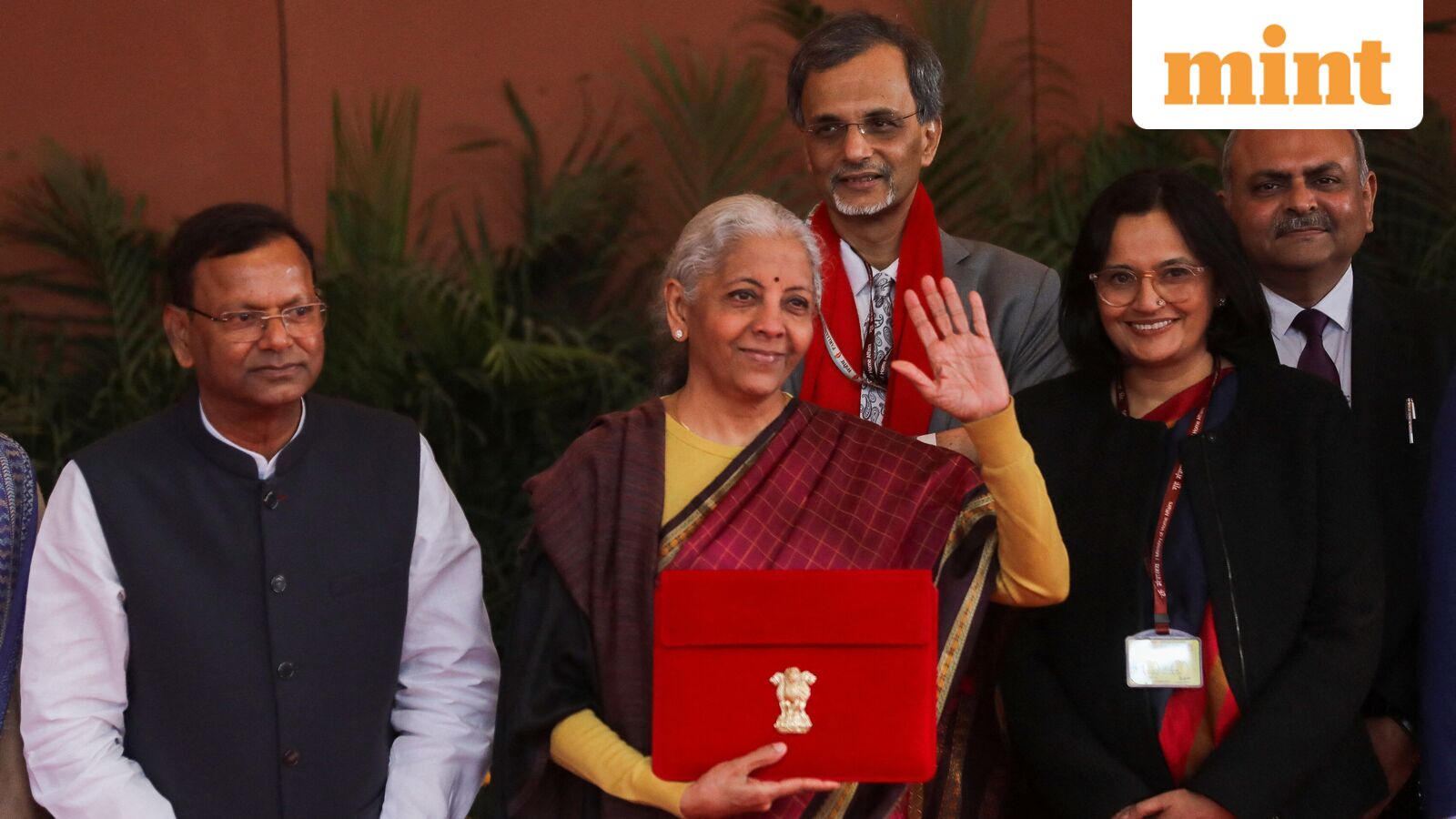
Union Finance Minister Nirmala Sitharaman is set to present the Union Budget 2026-27 on Sunday in the Lok Sabha. This will be Sitharaman’s ninth consecutive Union Budget, which is a record among all finance ministers in the history of independent India.
Here we take a look at the backroom team that has worked tirelessly behind the scenes to aid the finance minster in preparing the Union Budget for the next fiscal year:
Chief Economic Adviser: V Anantha Nageswaran
The 18th Chief Economic Adviser (CEA) to the Government of India, V Anantha Nageswaran, is one of the key players behind the Union Budget.
Nageswaran has been aiding the finance minster with the budget since his appointment to the post in January 2022. His term is set to end next year, in March 2027.
As the chief economic advisor of the country, Nageswaran prepares the Econonic Survey, which is presented in the Parliament the day before the Union Budget.
Economic Affairs Secretary: Anuradha Thakur
The Economic Affairs Secretary is the person who gives the overall shape to the Union Budget. Thakur is the head of the Budget Division, which drafts the country’s macroeconomic strategy as well as the core documents of the Budget.
Revenue Secretary: Arvind Shrivastava
This will be the first Union Budget as Revenue Secretary for Arvind Shrivastava. He is responsible for tax proposals within the budget, which cover both direct as well as indirect taxes.
Expenditure Secretary: Vumlunmang Vualnam
Expenditure Secretary Vumlunmang Vualnam looks after the expenditures of the Indian government, including implementation of schemes as well as rationalisation of subsidies. He plays a vital role in managing budget deficits as well as maintaining India’s fiscal discipline.
Financial Services Secretary: M Nagaraju
The head of the Department of Financial Services, M Nagaraju oversees the public sector financial enterprises, including insurance companies, banks, as well as pension institutions. Social security programmes, credit expansion, as well as financial inclusion are overseen by his department.
Arunish Chawla: Secretary, Department of Investment and Public Asset Management (DIPAM)
The DIPAM Secretary looks after the country’s divestment as well as privatisation plans. Financial targets which are not based on taxes and instead from the sale of the government’s stakes in public enterprises are looked after by the DIPAM.
The inputs provided by the DIPAM Secretary give shape to the estimates in the Budget on asset monetisation, while also shaping the government’s strategies in regards to the management of public assets.
K Moses Chalai: Secretary, Department of Public Enterprises
The Department of Public Enterprises looks after the capital expenditure as well as financial performance of the central public sector enterprises (CPSEs).
It also looks after the efficient use of the budgetary support provided to firms owned by the central government and makes sure the spendings align with the priorities of the country.