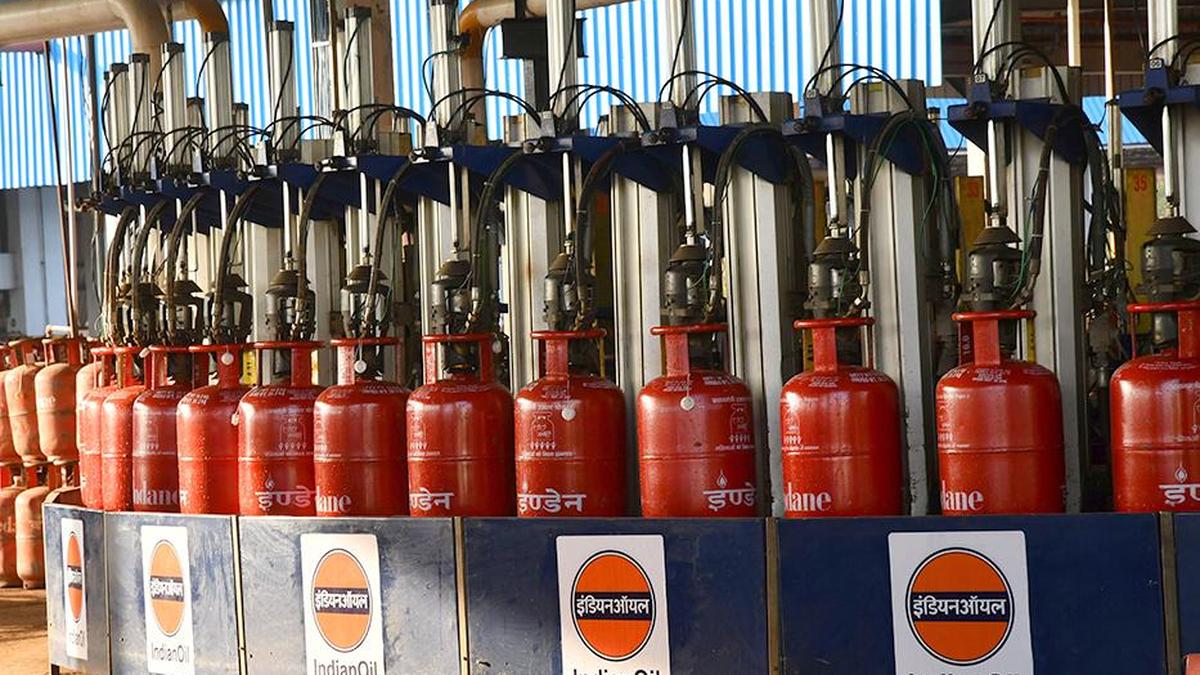
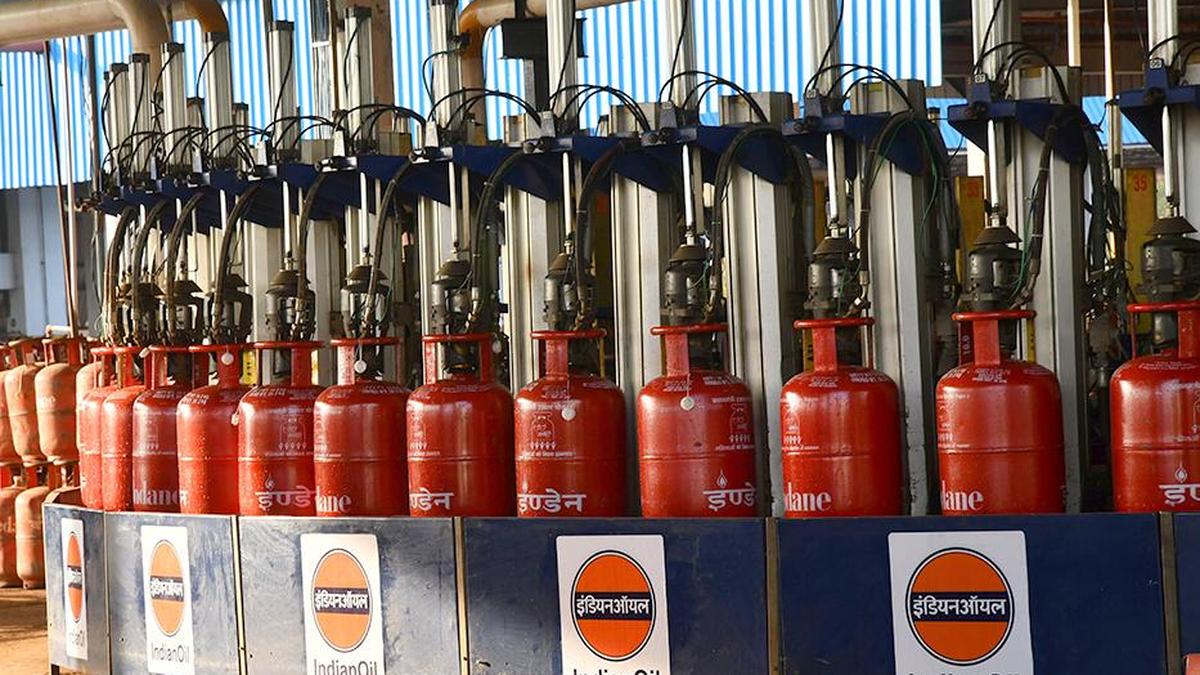
Liquified Petroleum Gas (LPG) is largely used for cooking gas across India.
| Photo Credit: Nagara Gopal
The West Asia conflict has sharply stressed India’s use of natural gas and cooking gas for a variety of applications. The government has today issued directives to prioritise cooking gas supplies.
Liquified Petroleum Gas (LPG) is largely used for cooking gas across India. The Pradhan Mantri Ujjwala Yojana scheme has ramped up the use of LPG for cooking by ramping up LPG production, bottling capacity and number of LPG distributors. The government has claimed that LPG coverage has increased to nearly 100% of households, up from 62% in 2016 when the scheme was launched. Other methods of cooking has virtually disappeared from Indian households. Total LPG consumption in India has, as a result, nearly doubled in 10 years by 2022-23.

Some 60% of India’s LPG is imported. And much of the imports comes from Persian Gulf countries Saudi Arabia and Qatar. With the Strait of Hormuz closed since March 1, LPG imports have been badly hit.
LPG consists mostly of propane and butane gases along with small quantities of higher hydrocarbons. While propane and butane occur along with natural gas, which is methane, they are also among a range of products produced from crude oil refining and petrochemical production. The government has directed refineries in India to increase propane-butane output of crude oil processing.
It is possible to import LPG from the U.S. where it is produced as Natural Gas Liquids along with shale natural gas. The sidestream is converted to LPG. China and Russia produce LPG while China’s production is mostly for internal consumption.
Oil Marketing Companies such as IOC and BPCL produce 40% of India’s LPG requirement. These are then bottled and distributed.
Liquified Natural Gas (LNG) is natural gas or methane liquified by cooling to below –160 C and transported on ships. Half of India’s natural gas requirement is produced within India and the other half is imported as LNG through ships. Of India’s LNG imports, Qatar supplies half, bulk of it through long-term contracts.
Overall, Qatar supplies 20% of all LNG across the world. Qatar’s shutting down of LNG production has created a large supply gas in global LNG. Other sources of LNG are U.S., Australia and Russia, all of whom will prioritise long-term contracts.
Imported LNG is temporarily stored in tanks near LNG terminals in Indian ports, then regasified for use as natural gas which is then transported through pipelines. These tanks are specially designed with high grade insulation to store the cryogenic liquid. But India does not have significant LNG storage capacity unlike say in Europe where they are stored in underground facilities for the sake of energy security.
In India, natural gas is used to produce ammonia, which is in turn used to produce fertilizers. Natural gas is also used to produce power; for City Gas Distribution (CGD) for cooking, vehicles and commercial uses; and in refineries, as well as for other industrial uses.

“A little less than 30% of natural gas use goes into making fertilizers, while power plants account for 13% and CDG, 21%,” says Prashant Vasisht, senior vice president of ICRA, a ratings agency that is an affiliate of Moody’s. He adds that industrial consumers can use alternative fuels such as naphtha and furnace oil. “In a stroke of luck for India, this crisis is occurring during the off season of fertilizer use. Farmers don’t need fertilizers now,” he says.
Globally, LNG and LPG prices float with crude oil prices. Crude oil prices have increased by nearly $20 per barrel in March alone – an increase of nearly 30%. And LPG-LNG prices have also increased as a result.
LNG is procured by entities such as Petronet LNG, BPCL and regasified and supplied to CGD entities, fertilizer makers and so on.
While much of LNG is supplied through long-term contracts, a spot market is also available. The JKM index that measures spot prices has been volatile since the conflict started.
Published – March 07, 2026 07:00 am IST