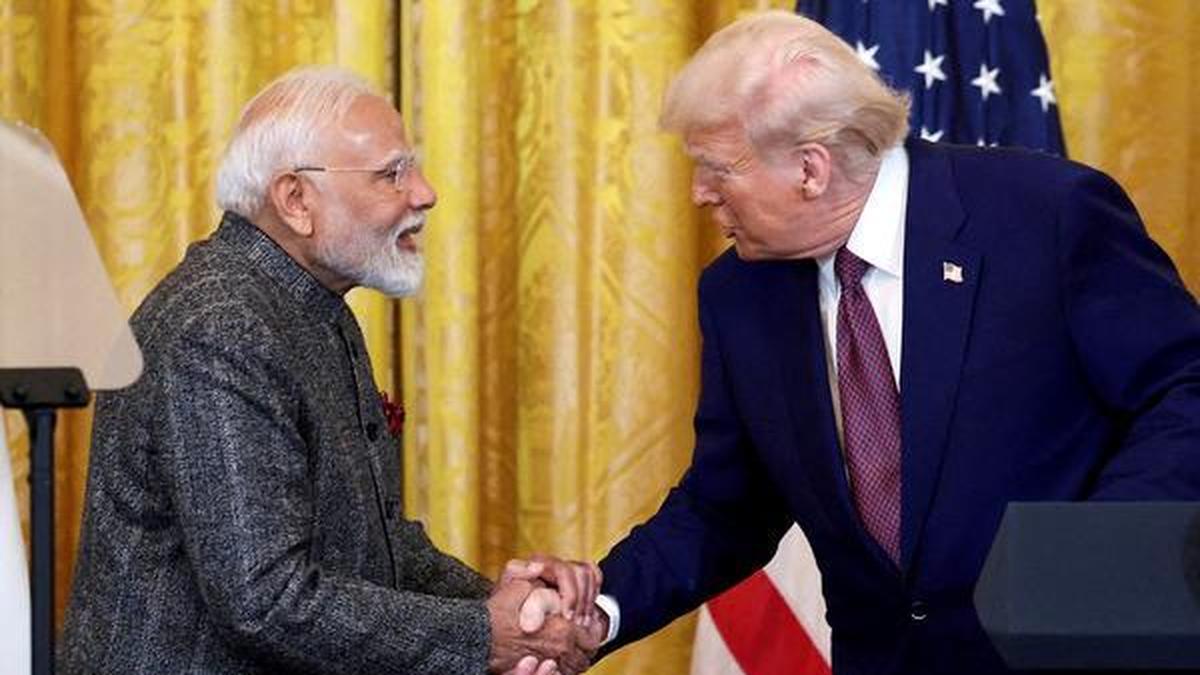
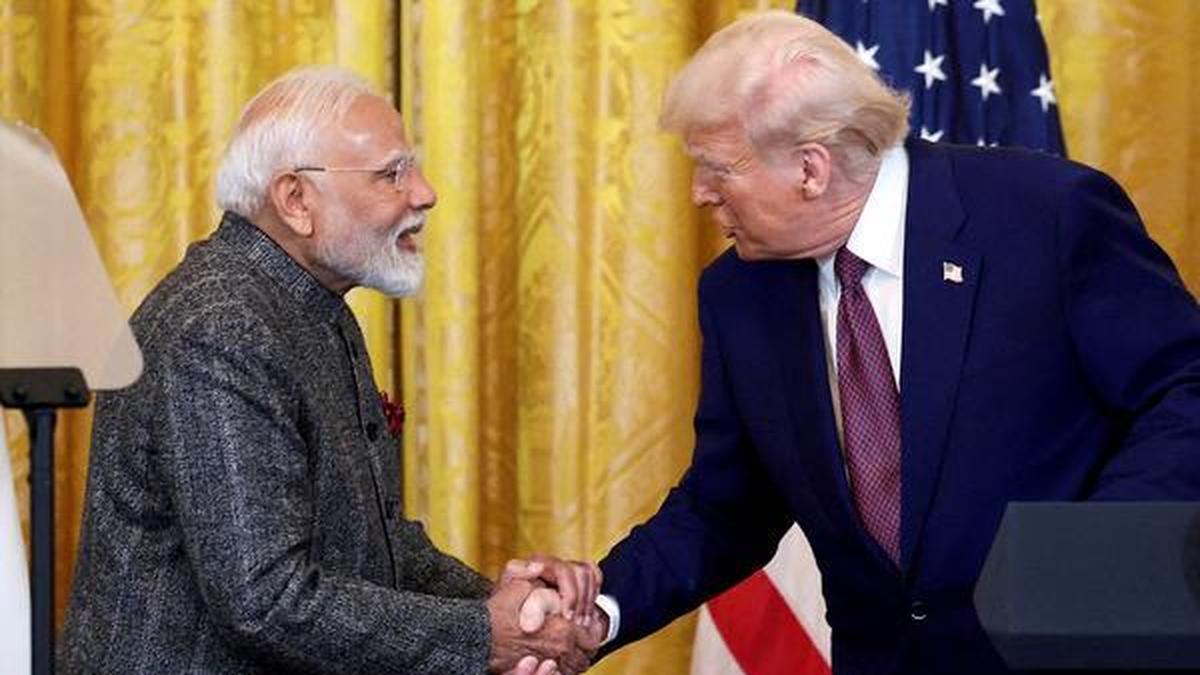
U.S. President Donald Trump and Prime Minister Narendra Modi shake hands. File.
| Photo Credit: Reuters
The United States and India moved closer to a trade pact on Friday (February 6, 2026), releasing an interim framework that would lower tariffs, reshape energy ties and deepen economic cooperation as both countries seek to realign global supply chains.
Here are key points of the joint statement:
India-U.S. trade deal LIVE updates
What was announced
United States and India agree on a framework for an interim reciprocal trade agreement
Framework linked to broader U.S.-India Bilateral Trade Agreement (BTA) talks launched on Feb. 13, 2025
Deal aims at reciprocal, balanced trade and supply chain resilience
India’s tariff actions
To eliminate or reduce tariffs on all U.S. industrial goods
To cut duties on a wide range of U.S. farm and food products, including DDGs (dried distillers’ grain) and red sorghum for feed, tree nuts and fruits, soybean oil, wine and spirits
To provide preferential market access in agreed sectors
U.S. tariff actions
To apply an 18% reciprocal tariff rate on Indian-origin goods under existing executive orders
Tariffs initially cover sectors including textiles and apparel, leather and footwear, plastics and rubber, organic chemicals, home decor and artisanal goods, certain machinery
To remove reciprocal tariffs on a wide range of Indian goods after successful conclusion of the interim deal, including generic pharmaceuticals, gems and diamonds, aircraft parts
Stell, aluminium, and auto parts
U.S. to remove certain Section 232 tariffs on Indian aircraft and aircraft parts tied to steel, aluminium and copper measures
India to receive a preferential tariff-rate quota for auto parts under U.S. national security tariff rules
Pharmaceutical tariff outcomes subject to ongoing U.S. Section 232 probe
Non-tariff barriers
India to address long-standing barriers affecting U.S. medical devices, ICT (Information and Communication Technology) goods import licensing, U.S. food and agricultural products
India to review acceptance of U.S. or international standards and testing rules within six months in identified sectors
Both sides to discuss standards and conformity assessment procedures
Rules and safeguards
Both sides to set rules of origin to ensure benefits accrue mainly to U.S. and Indian producers
Either side can modify commitments if the other changes agreed tariffs
Digital trade
Both countries commit to address discriminatory or burdensome digital trade practices
To work toward digital trade rules under the full BTA
Supply chains and security
Both sides to align on economic security and supply chain resilience
Cooperation planned on investment reviews, export controls, non-market policies of third countries
India purchase commitments
India intends to purchase $500 billion worth of U.S. goods over five years, including energy products, aircraft and parts, precious metals, technology products, coking coal
Both sides to expand technology trade, including Graphics Processing Units (GPUs) and data centre equipment
Next steps
Framework to be implemented promptly
Countries to finalise interim agreement while continuing negotiations toward a full bilateral trade agreement.
Published – February 07, 2026 07:03 am IST