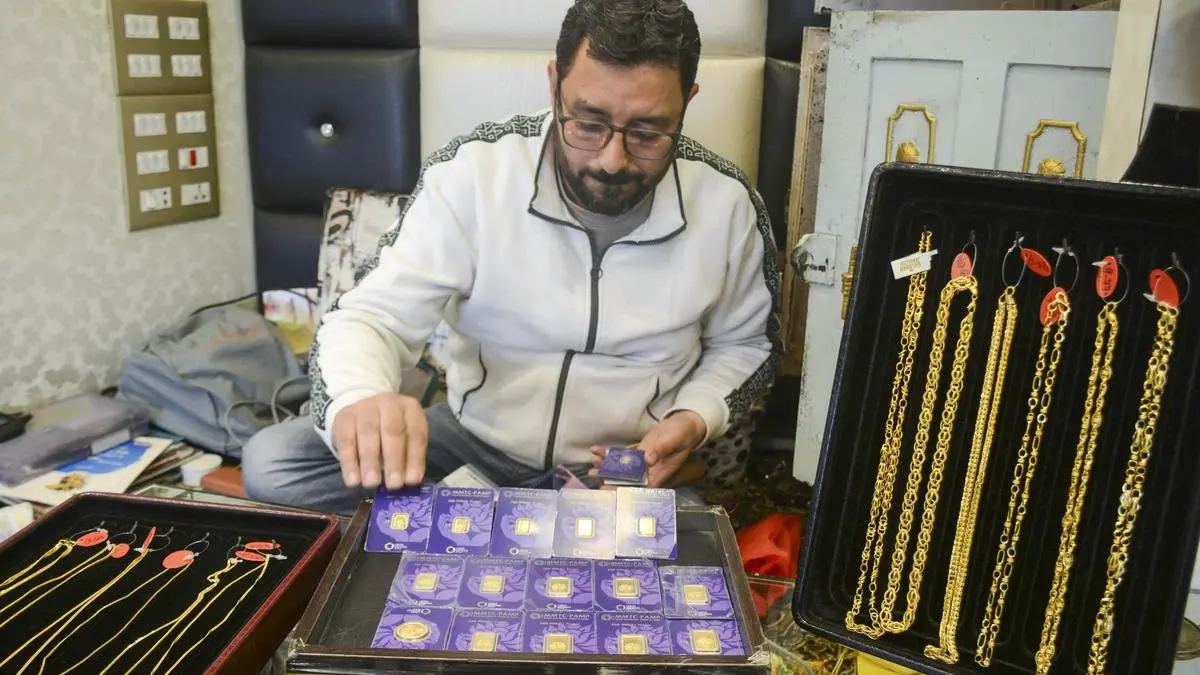
While welcoming measures supporting MSMEs and lab-grown diamond (LGD), stakeholders from gems and jewellery sector said some of their requests for a cut in import duty on gold and GST rationalisation did not materialise in the Union Budget 2026-27.
Kirit Bhansali, Chairman, Gem and Jewellery Export Promotion Council (GJEPC), said: “We thank the government for a positive, growth-focused Budget that addresses key bottlenecks and gives fresh momentum to India’s gems and jewellery sector. It improves liquidity, supports manufacturing and strengthens exports across the value chain.”
The removal of the ₹10 lakh cap on courier exports is a big boost for e-commerce, enabling MSMEs, artisans and small jewellery brands to reach global buyers directly, with smoother handling of returns and quicker turnaround.
NID initiative
Extending duty-free import of LGD seeds and sawn diamonds till March 2028 is a timely and practical step. It keeps input costs low, supports production and exports, and safeguards a fast-growing segment where India already leads globally, helping secure the future of our industry.
Setting up a new National Institute of Design (NID) will strengthen design talent and innovation in the country. For the gems and jewellery sector, this means better product development, contemporary styling and stronger branding, helping Indian manufacturers move up the value chain and compete more effectively in global markets.
“Overall, this budget gives the right push for growth towards Viksit Bharat and moves us closer to our goal of scaling exports to $100 billion by 2047,” Bhansali said.
Export sops missing
Prithviraj Kothari, Managing Director at RiddiSiddhi Bullions Ltd and President of India Bullion and Jewellers Association Ltd, said the bullion industry had expected a cut in import duty on gold, GST rationalisation, export incentives and extended credit support. The Budget announced capital gains tax exemption on RBI Sovereign Gold Bonds, applicable only to original subscribers, not to secondary market buyers, while there were no announcements of any meaningful reduction in gold import duty or GST reforms.
Shruti Jain, Chief Strategy officer, Arihant Capital Markets, said the precious metals markets reacted sharply after the budget, with gold prices falling to around ₹1.36 lakh per 10 grams and silver plunging as much as 19 per cent on MCX, reflecting heightened volatility and cautious sentiment around fiscal policy outcomes. This sharp sell-off in gold and silver shows how Budget day expectations can impact commodities trading, especially in a market already jittery about policy direction and macro uncertainty.
Tapan Patel, Fund Manager, Commodities, Tata Asset Management, said commodity prices may follow broad global geo-economic factors focusing more on US FOMC stance, upcoming economic data and shift in geopolitical factors. Investors may re-assess asset allocation and look for relative stability and consolidation in commodities to invest after recent volatile move and sharp selloff in gold, silver and copper prices.
Strong signal for manufacturing
Ricky Vasandani, CEO & Co-Founder, Solitario, said Budget 2026 sends a strong signal for sectors driven by advanced manufacturing, ethical sourcing and consumer-led growth. Measures such as the continued focus on retail-led demand, the ₹1.4 lakh crore allocation towards growth-oriented priorities and the ₹10,000 crore SME Growth Fund under the ‘Champion SMEs’ initiative are expected to improve access to capital for innovation-driven businesses.
Equally impactful are the export-focused reforms, including faster and low-intervention customs processes, duty rationalisation and exemptions on capital goods linked to critical mineral processing. Alongside the sustained emphasis on research and development and responsible adoption of advanced technologies, these steps create a more enabling environment for lab-grown diamond and ethical luxury manufacturers to scale responsibly, strengthen global competitiveness and contribute meaningfully to India’s vision of Viksit Bharat.
Chetan Thadeshwar, Chairman and MD, Shringar House of Mangalsutra Ltd (Gold & Jewellery), said the Union Budget 2026 reinforces the importance of macro-economic stability and disciplined fiscal management at a time when domestic consumption remains the primary growth driver for the jewellery industry. The Government’s emphasis on realistic budgeting, tighter monitoring of expenditure and improved execution efficiency provides a more predictable operating environment for consumer-facing sectors that are sensitive to inflation and income security.
“As economic stability supports household confidence and formal employment generation, discretionary demand for jewellery is likely to strengthen across both wedding-led and daily-wear categories. For the industry, this predictability enables better long-term planning across manufacturing, retail and exports, while at a broader level it supports consumption-led growth, employment generation and India’s position as a trusted global jewellery manufacturing hub,” he said.
Decisive shift for women livelihoods
Arthi Ramalingam, Founder and CEO, Eternz, said the Union Budget 2026 marks a decisive shift from enabling women’s livelihoods to enabling women’s ownership. Initiatives like She MARTS and the continued success of the Lakhpati Didi programme recognise that true economic empowerment comes when women are given market access, brand visibility and the ability to scale, not just credit. For sectors like jewellery and design-led consumer brands, this is a powerful signal. “At Eternz, we work closely with small, independent and women-led jewellery brands, and policies that strengthen community-owned retail, skilling and innovative financing directly accelerate their growth journeys,” she said.
Namita Kothari, Founder, Akoirah by Augmont, said the Union Budget 2026-27 reinforces productivity-led growth and stable fiscal management, which supports long-term confidence in discretionary categories like jewellery. While there are no direct consumption incentives for the sector, the broader focus on trade facilitation, process simplification and competitiveness is constructive for organised, compliance-driven players.
For emerging categories like lab-grown diamonds, a more sustainable, innovation-led segment, long-term competitiveness will be shaped by stronger manufacturing capabilities, skilling depth and export readiness, along with building deeper consumer trust through transparency, clear quality standards and consistent value communication.
No easing of cost pressures
Renisha Chainani, Head of Research, Augmont, said the bullion industry expected support to ease cost pressures from high gold and silver prices, including import duty reductions on gold, cut and polished diamonds, coloured gemstones, and GST rationalisation. It also sought simplified customs procedures, duty-drawback reform and policy steps to help position India as a global diamond trading hub and boost exports and competitiveness. “In the actual budget announced, there were no major sector-specific tax cuts or import duty reductions announced specifically for the gems and jewellery sector,” Chainani said.
Mangesh Chauhan, Managing Director of Sky Gold & Diamonds, said the Union Budget reinforces economic stability and long term growth, creating a positive environment for the jewellery industry that is driven by consumer trust and aspirations. Its focus on fiscal discipline, employment generation and ease of doing business will strengthen domestic demand and support the organised sector. For manufacturers like Sky Gold and Diamonds, this direction encourages innovation, expansion and technology adoption, enabling India to further strengthen its position as a global jewellery hub. “We remain committed to delivering superior craftsmanship, transparency and value while contributing to the growth of the industry and the nation,” Chauhan said.
Published on February 2, 2026