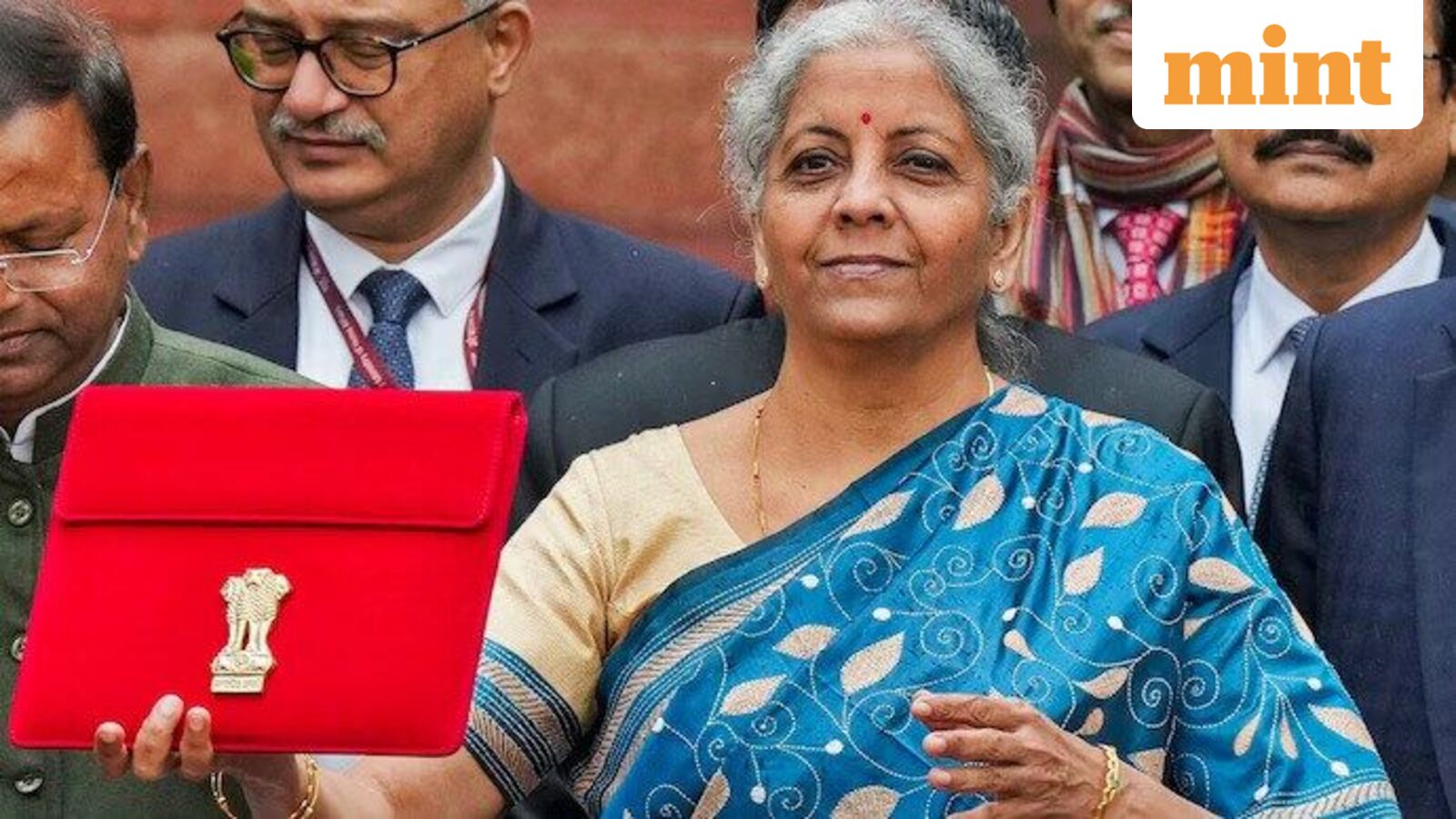
Budget 2026: Last year, Finance Minister Nirmala Sitharaman surprised the Indian middle class taxpayer with a mega income tax overhaul, which significantly lowered the income tax outgo for several people. In Budget 2026, taxpayers are anticipating another surprise income tax announcement that would benefit them. But the question remains — will FM Sitharaman announce any income tax cut in Budget 2026 on 1 February?
According to experts in the industry, Budget 2026 income tax expectations can be limited to tax rationalisation and some changes in terms of TDS and standard deduction. No major income tax cut is anticipated this year, given the FM already announced an overhaul during the last Budget itself.
According to Naval Kagalwala, COO and head of products at Shriram Wealth, Budget 2026 is likely to focus on capex in the upcoming financial ear as there will be limited headroom in FY28 during the implementation of the 8th Pay Commission. “We do not anticipate any major changes in personal income tax this year,” he said.
What income tax changes should be expected in Budget 2026?
The New Tax Regime remains the winner for taxpayers who earn under ₹25 lakh as they value its simplicity and lower rates, according to ClearTax founder and CEO Archit Gupta. However, according to data collated by the company, 26% of taxpayers still file their ITRs through Old Tax Regime.
“The reason is structural: their entire financial lifecycle is deeply anchored in legacy benefits like HRA and home loans. For this group, switching isn’t just a tax calculation; it is a disruption that breaks the long-term wealth structure they have spent years building,” Gupta said.
He urged India Budget 2026 to “expand deductions beyond just the NPS. Recognize that high earners rely on a mix of EPF, PPF, ELSS etc for building a safety net.”
Sunil Kumar Roy, professor and Dean at the School of Business of Manav Rachna University, echoed Gupta’s views, saying that Budget 2026 should focus on income tax rationalisation.
“Many salaried individuals are looking for greater clarity and simplification between the old and new tax regimes,” he said.
Will standard deduction increase?
Experts and stakeholders are also expecting an increase in the standard deduction for salaried taxpayers, which would bring further relief to them in terms of income tax outgo.
The standard deduction stands at ₹75,000 under the old tax regime and ₹50,000 under the new tax regime.
“Budget 2026 offers an opportunity to align India’s personal income tax structure with the evolving needs of the salaried class. While a dramatic overhaul may be unlikely, measures such as increasing the standard deduction threshold — currently at ₹75,000 under the new tax regime — or refining slab thresholds and rebates can meaningfully reduce tax outgo for millions of employees,” according to Senthil R Kumar, managing director and CEO at Nitstone Finserv Pvt. Ltd.
Taxpayers and experts are demanding that the standard deduction should be increased to ₹1 lakh, as opposed to the current ₹75,000, which was done in Budget 2024.
Nehal Mota, co-founder and CEO of Finnovate said, “The Union Budget 2026 may consider increasing the standard deduction for salaried employees to ₹1 lakh.”
According to him, a higher standard deduction would “help salaried taxpayers manage rising living costs.”
What income tax cuts were made Budget 2025?
In Budget 2025, FM Nirmala Sitharaman introduced major changes in personal income tax, providing a relief for taxpayers who file their ITR under the New Tax Regime.
A key change that was introduced was making income up to ₹12 lakh tax-free with a rebate. For salaried individuals, this came at ₹12.75 lakh after the standard deduction.
The tax slabs were also overhauled per follows —
Up to ₹4,00,000: Nil
₹4,00,001 to ₹8,00,000: 5%
₹8,00,001 to ₹12,00,000: 10%
₹12,00,001 to ₹16,00,000: 15%
₹16,00,001 to ₹20,00,000: 20%
₹20,00,001 to ₹24,00,000: 25%