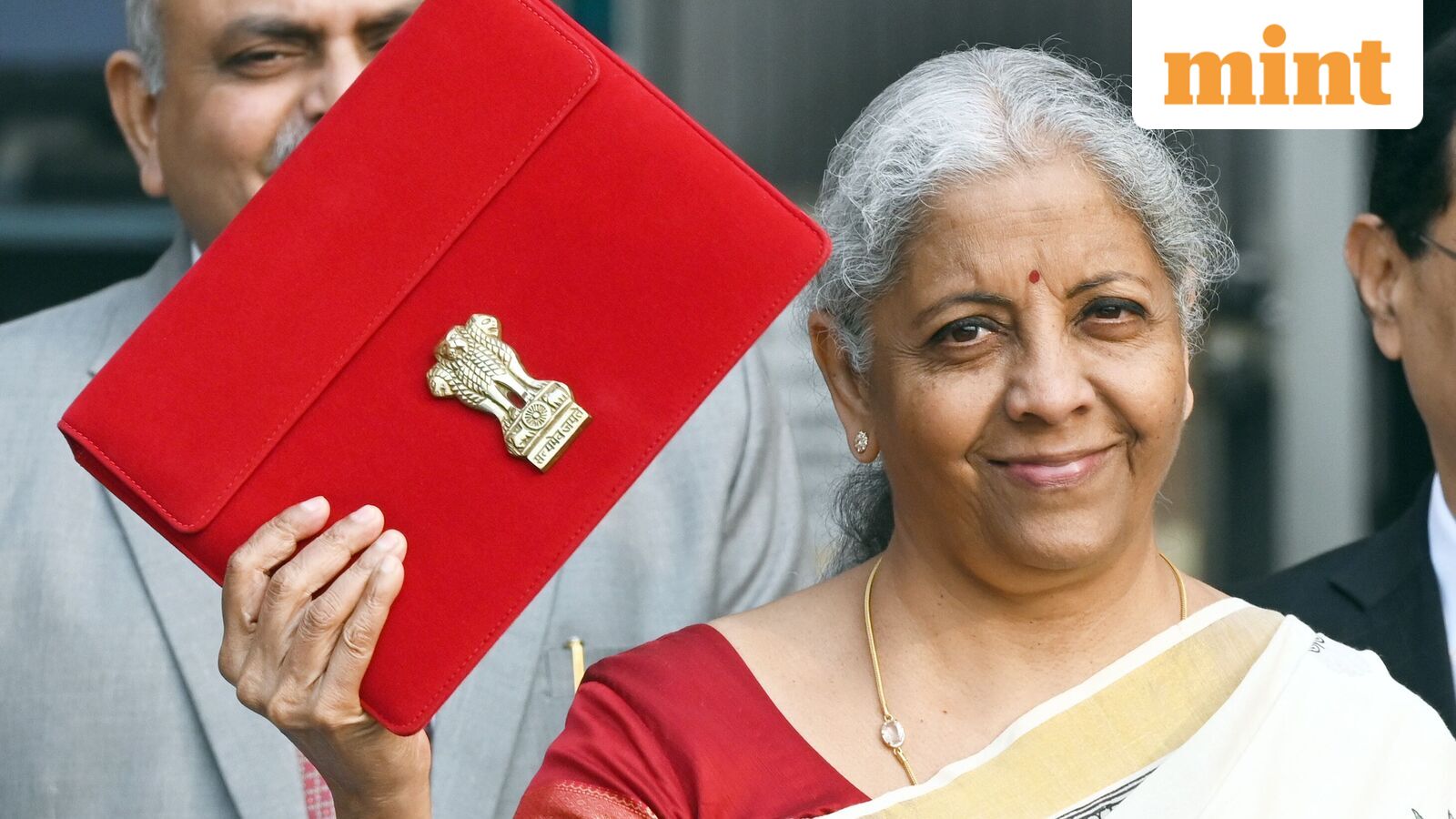
Budget 2026: Union Finance Minister Nirmala Sitharaman will present the biggest financial announcement of the year, Budget 2026-27, before both Houses of the Parliament on Sunday, 1 February 2026.
As all eyes are now on Sitharaman’s speech, scheduled to start at 11 am. The Union Budget 2026 will set the trajectory for the Indian economy in the upcoming financial year 2026-27.
10 key things to watch in Budget 2026
1. LTCG focus: In this year’s budget, taxpayers are hoping for an increase in the threshold of long-term capital gains (LTCG) tax, alongside an expansion of the Section 87A rebate under the new tax policy.
The Association of Mutual Funds in India (AMFI) has urged the central government to amend rules and allow the rebate under Section 87A, provided the total income (including capital gains) does not exceed ₹12 lakh, to provide greater relief to the middle class.
Although the government offers a tax exemption of ₹60,000 under the new tax policy. However, if people invest in mutual funds, despite earning less than ₹12 lakh a year, they are still liable to pay capital gains tax.
“From a mutual fund perspective, I feel the threshold is very low. The government has been promoting long-term investment for many years, and accordingly, if a person is selling equity based on mutual fund units after 5-7 years, ₹1.25 lakh tax exemption is a low threshold,” said Mihir Tanna, Associate Director of Direct Tax at SK Patodia & Associate LLP.
2. Standard Deduction hike: This year’s budget has high expectations of a potential hike in the standard deduction, as people are looking for an increase in the exemption from the ₹75,000 existing levels to ₹1 lakh under the new regime, according to experts.
This potential relief from the central government, if implemented, will bring the tax relief amount up to ₹13 lakh, which will be subject to zero tax after accounting for the rebates.
“An increase in the standard deduction would help offset rising living costs, while rationalisation of TDS provisions could ease cash-flow pressures during the year,” said Pranav Koomar, Founder and CEO of PlusCash.
3. Fiscal Deficit: This year’s focus is on the fiscal deficit of the country. Despite the lower tax revenues, the government is expected to meet its fiscal deficit target for the year.
“The government’s reiterated commitment to fiscal prudence pathway, on the back of 4.4% deficit target likely to be achieved, is indeed reassuring in the present context as geo-political headwinds and risks would continue to influence economic and fiscal policy in material way,” said Sumit Singhania, Partner, Deloitte India.
4. GDP growth figures: As the Indian economy is projected to grow at a range of 6.8%-7.2% in FY27, backed by strong macro fundamentals and a series of regulatory reforms, concerns loom over the low nominal growth rate of the economy at 8%, compared to 10.1% assumed for 2025-26 in the budget.
From the upcoming month, India will also adopt a new base year of 2022-23, replacing the earlier base year of 2011-12, to reflect the structural changes better in the economy.
5. Borrowing focus: In Budget 2026-27, the focus will also be on the country’s borrowing focus, as a potential higher fiscal deficit will increase the borrowings for the financial year.
Mint reported earlier that central government debt is pegged at 55% of the country’s GDP for the financial year 2025-26, and if State borrowings are factored in, then the percentage of GDP rises to 85.23%
6. Private sector investment: Experts are also looking out for tax relief, improved ease of doing business, and sustained public investment, which is likely to create a favourable environment for India’s economy through policy and stronger private sector participation.
“The combination of tax relief, improved ease of doing business, sustained public investment, and deliberate shift toward capital formation and human capital investment cumulatively create a favorable environment for the continued growth of the Indian economy. However, the road ahead would entail its own set of challenges, including global uncertainties, currency pressures and uneven state finances, which would need to be navigated through policy and stronger private sector participation for maintaining this trajectory,” said Amit Gupta, Partner at Saraf and Partners.
7. Deregulation theme: People also need to look out for the government’s deregulation efforts via tax cuts, which are aimed at fuelling demand in the economy and improving the ease of doing business.
“This budget is unlikely to be a dull one. While large giveaways may be off the table, we expect the reform momentum to continue and possibly accelerate, which we believe will be the defining feature of this Budget. Deregulation will be given a bigger push and will be the central theme of this budget,” said N. Aruna Giri, CEO, TrustLine Holdings.
8. Capex: This year’s budget will also focus on the rise in capital expenditure for the upcoming financial year. Earlier data show that between 2021-22 and 2025-26, the share of capex as a percentage of GDP increased from 2.5% to 3.1% due to the government’s ability to spend on infrastructure and complete its fiscal responsibility commitment.
9. Tax revenues: Mint reported earlier, citing CareEdge Ratings, that the tax revenues are estimated to miss their target by at least ₹3 trillion in the financial year ending 2025-26 due to the sharp cuts in the goods and services tax (GST) rates in the economy and the income tax benefits.
This year, the focus will be on FM Sitharaman and how the Budget has found ingenious ways to expand the tax base and improve tax collections for the economy.
10. Divestment: The focus remains on the government’s move to divest its assets to the private sector. So even as the government has relied on non-tax revenues in recent years, the non-tax levy from divestment has been consistently ignored, Mint reported earlier.
This shows a huge gap between its intention and execution year after year, but the focus will be on the Finance Ministry to see whether it has plans for any change to the government’s divestment plans.