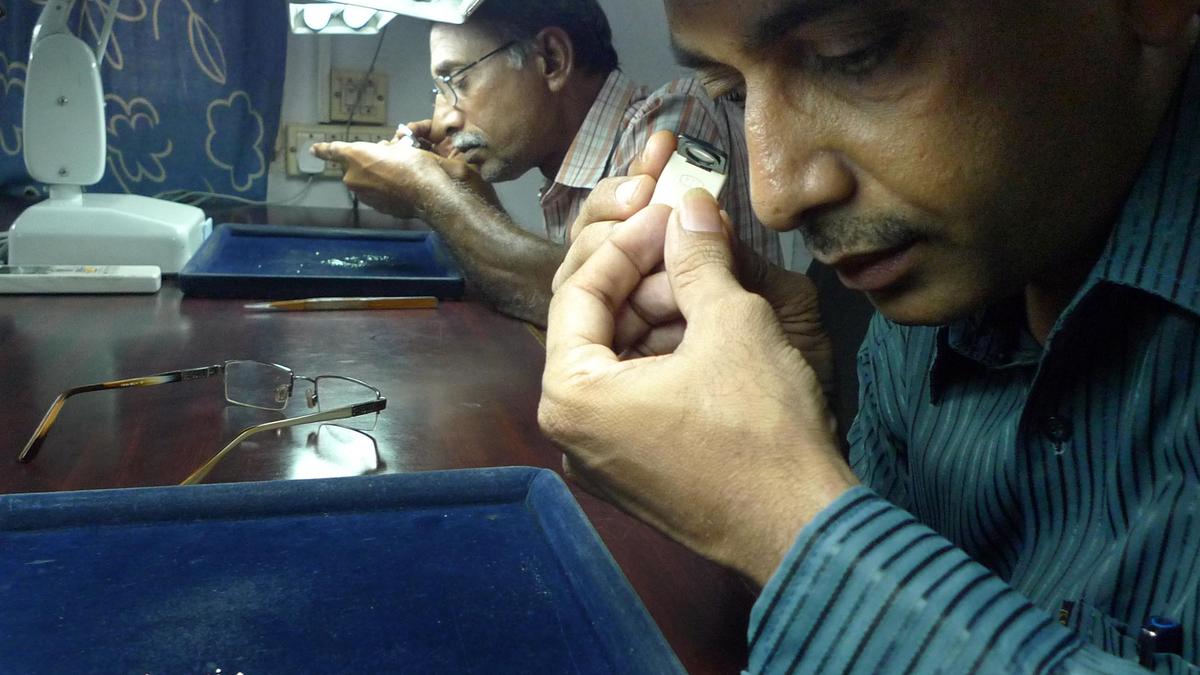
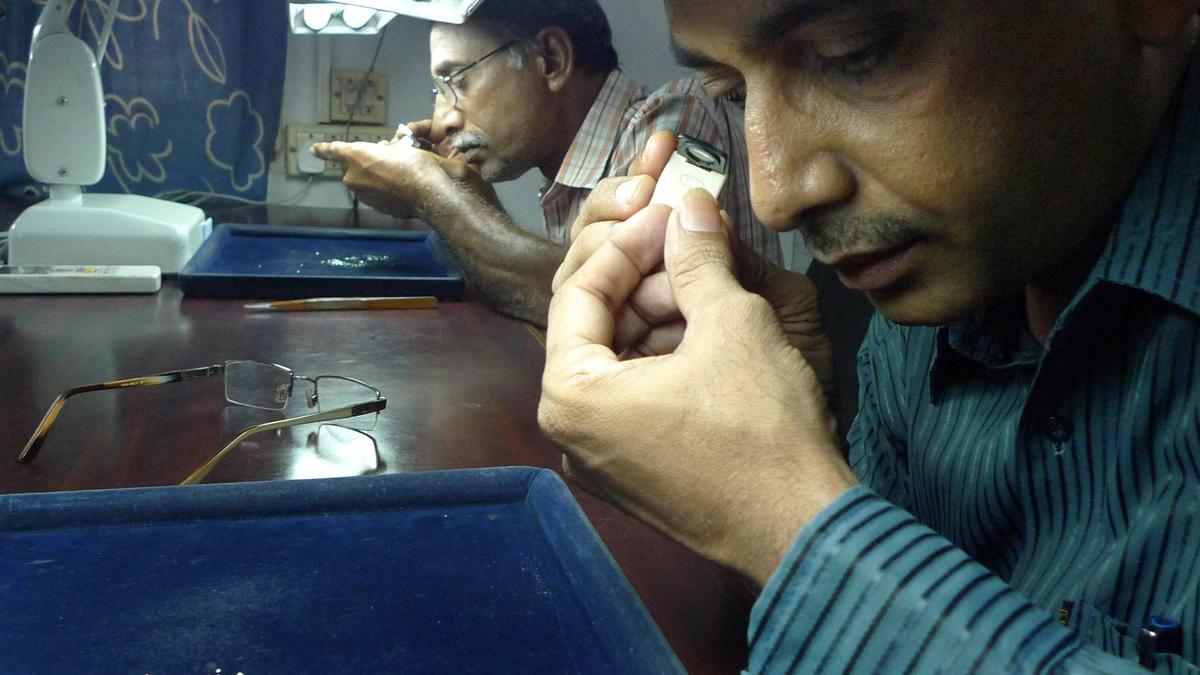
The move is unlikely to have an impact on India due to large skill availability, unmatched cost efficiency, infrastructure, and a deeply integrated supply chain.
| Photo Credit:
GANESAN V
The Belgian government’s recent decision to permit foreign diamond sorters and polishers may not have a major impact on the cut and polish trade in India, due to cost advantage and a well-established supply chain.
Diamond companies in Belgium can now recruit skilled professionals from outside the EU far more easily.
Starting January, the Flemish government will fast-track the process for combined work and residence permit (single permit) without having to demonstrate a shortage in the local labour market.
Diamond polishers and sorters have been added to the government’s list of medium-skilled occupations for which there is a structural shortage.
Talent crunch
The shortage of skilled labour had threatened Antwerp’s status as a global diamond trading hub. Trade volumes in the city fell 25 per cent in 2024 to $24.4 billion from $32.5 billion in the previous year, according to Antwerp World Diamond Centre figures.
India cuts and polishes over 120 million carats of diamonds annually and over the last five decades, the industry has built skill and expertise across every size and shape of diamond.
Kirit Bhansali, Chairperson, Gem and Jewellery Export Promotion Council of India, said that the recognition of the specialised capabilities of Indian talent in international markets reflects the global value of India’s craftsmanship.
“We do not see this having any impact on India’s diamond manufacturing strength. India will continue to be the world’s leading source of skilled diamond workers and a key pillar of global diamond manufacturing,” he said.
Indian leverage
Prithviraj Kothari, President, India Bullion and Jewellers Association, and Managing Director of RiddiSiddhi Bullions, said the industry will remain concentrated in India, particularly Surat, due to scale, cost-effectiveness, skilled workforce and established support systems that are difficult for Europe to recreate.
However, Antwerp may be able to reclaim niche markets for high-value stones, speciality cuts, luxury-grade polishing and technology-based sorting and processing methods, he said.
The Flemish reform will be a significant factor in attracting skilled talent to Antwerp and reducing operational bottlenecks, and rebuilding part of the region’s traditional craftsmanship, he added.
Rajesh Rokde, Chairman, All India Gem and Jewellery Domestic Council, said the Indian diamond ecosystem, especially in Surat and Mumbai, was built over decades with large skill availability, unmatched cost efficiency, infrastructure and deeply integrated supply chain.
At best, Antwerp may attract a niche talent pool for specialised high-end or large stones, which is already a segment where global centres collaborate, but the heart of the global cutting and polishing industry will remain in India, he said.
Published on December 2, 2025