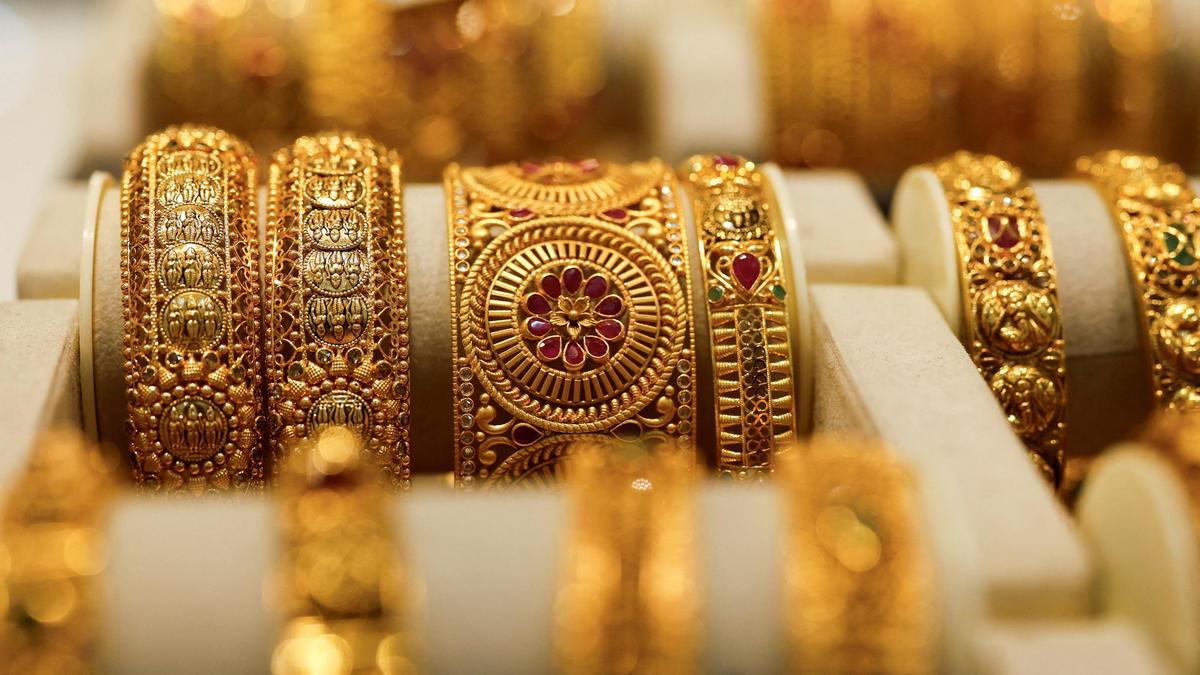
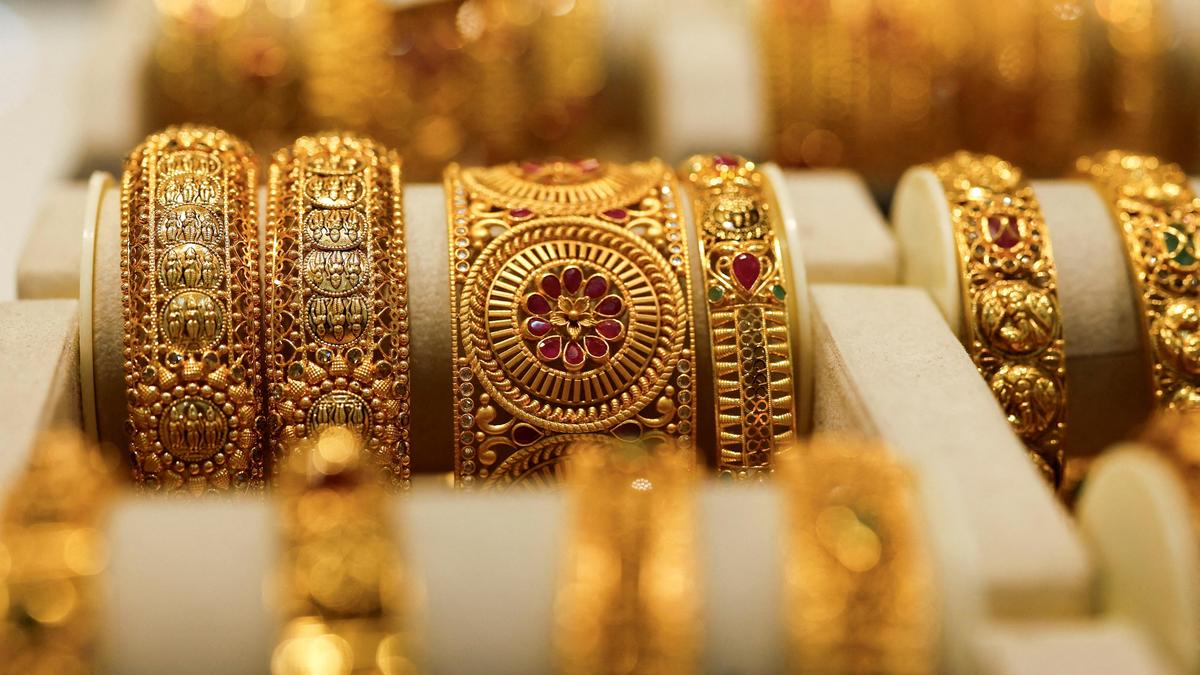
FILE PHOTO: Gold bangles are displayed at a jewellery store in Mumbai, India, March 20, 2025. REUTERS/Francis Mascarenhas/File Photo
| Photo Credit:
FRANCIS MASCARENHAS
Every Akshaya Tritiya, India does what it has done for generations: it buys gold. Families see it as prosperity, continuity and security. That instinct is deeply cultural. But in 2026, it should also become an economic strategy.
India does not need to be taught to value gold. What it needs now is a system that allows the country to use its existing gold better.
India remains one of the world’s largest consumers of gold, and a large part of this demand is still met through imports. At the same time, the country depends heavily on imported oil. In a world where geopolitical tensions can drive up both oil and gold prices together, this dual dependence puts added pressure on the current account.
Electronic gold receipts
The irony is that India is not short of gold. Across homes, lockers and institutions lies an enormous stock of privately held gold. It is valuable, trusted and deeply embedded in household wealth. Yet much of it remains idle — outside formal markets, outside transparent settlement systems and outside productive circulation. As a result, India continues to import gold even when significant domestic stock already exists.
This is why India now needs a UPI moment for gold.
UPI did not create the need to transact. It created simple, instant and trusted rails that made transactions seamless. Gold now needs a similar transformation.
Consider a simple customer journey. A person walks into a jeweller with old gold. The gold is tested transparently. Once both sides agree, the equivalent value is credited instantly as Electronic Gold Receipts (EGRs) or regulated digital gold into the customer’s demat account or digital wallet.
That instant credit changes everything.
Addressing pain points
It replaces a fragmented and opaque process with one that is visible, standardised and trustworthy. The customer receives immediate value in a recognised format, while the physical gold moves through the formal system for refining and settlement in the background.
This does not require a dramatic change in consumer behaviour. It simply removes friction.
Today, many households are willing to sell, exchange or restructure old gold, but are held back by distrust, inconsistent assessment and delayed settlement. Many also hand over idle gold informally in search of returns, without transparency or proper safeguards. If these pain points are addressed, a meaningful portion of household gold can move into the formal economy.
Once gold is converted into EGRs or regulated digital gold, it can be held, traded or pledged. With the right framework, it can also be lent to manufacturers through regulated platforms, allowing domestic gold to circulate more efficiently instead of relying only on fresh imports.
That is what true self-reliance in gold should mean: not reducing demand, but making existing gold part of a formal, productive system before turning to imports.
For this to work at scale, a few enablers are essential. Clear and consistent GST treatment across the value chain is critical. A regulated framework for lending and borrowing against EGRs or digital gold, with standardised contracts and risk controls, is equally important.
Following the same path
Refineries will be the backbone of this system. Their role in assaying, refining, standardising purity and ensuring trusted conversion into market-acceptable gold makes the entire architecture credible and scalable.
The role of government is to enable, not operate.
UPI succeeded because the state created the architecture and trust framework, while the fintech ecosystem built adoption on top of it. Gold can follow the same path — with clear protocols, regulatory certainty and standardised infrastructure supported by market participants.
India has already shown that it can build digital public infrastructure at scale. There is no reason the same cannot be done for gold.
And there may be no better moment to begin than Akshaya Tritiya.
For too long, the conversation around gold has been limited to buying and holding. The bigger question is now impossible to ignore: why should a country with such a vast domestic stock continue to depend so heavily on imports simply because its gold remains inactive?
This Akshaya Tritiya can mark a shift — from buying more gold to using gold better.
The author is a Director at Augmont
Published on April 18, 2026