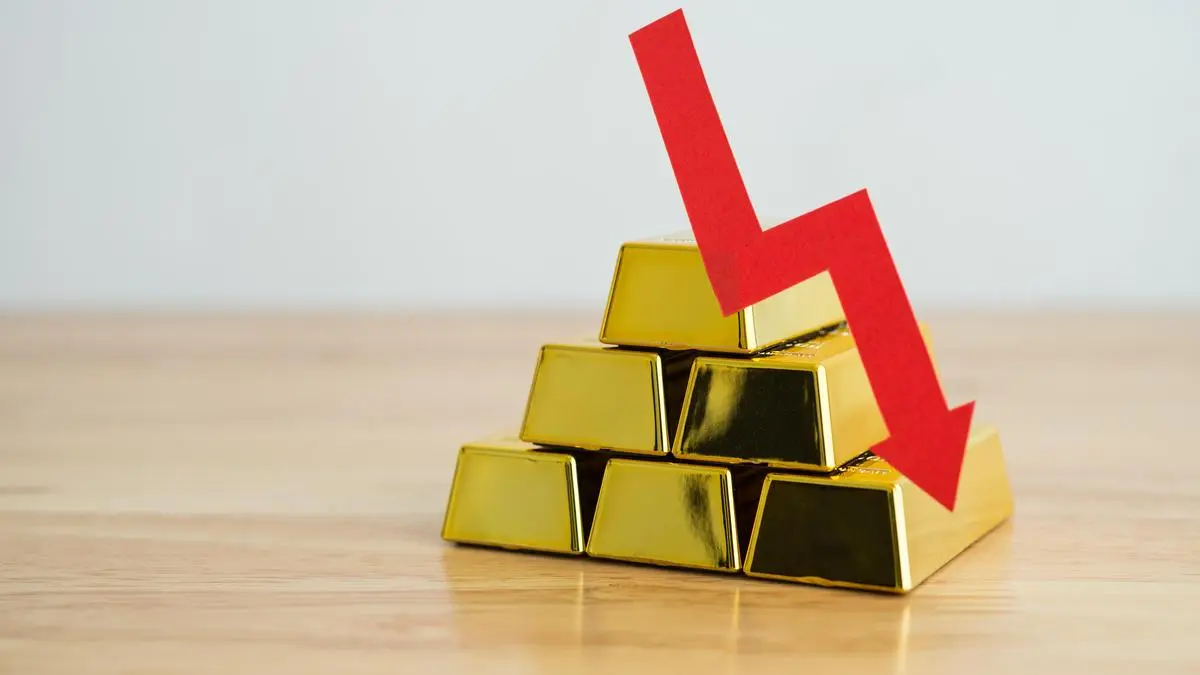

Gold prices plunged by ₹3,263 or 2 per cent to ₹142,942 per 10 gram on Friday
| Photo Credit:
REUTERS
A surge in geopolitical tensions in West Asia has jolted India’s gold market, triggering sharp price swings and dampening both domestic buying and export demand at a critical juncture for the jewellery trade.
Gold prices, which had rallied for most of the month, have turned sharply volatile amid global uncertainty, while a weakening rupee and mounting logistical disruptions threaten to further squeeze imports. The combined impact is weighing on sentiment across the value chain, from retailers to exporters, as consumers turn cautious in the face of sudden price corrections.
Gold prices plunged by ₹3,263 or 2 per cent to ₹142,942 per 10 gram on Friday against ₹146,205 in line with the global trend, according to the Indian Bullion Jewellers and Association of India data. In fact, gold prices have declined by ₹24,529 per 10 gram or 15 per cent in March due to uncertainty kicked off by the US attack on Iran.
Similarly, silver prices have fallen to ₹221,647 per kg against ₹234,814 on Thursday. It has dipped by ₹68,201 from ₹289,848 per kg on March 2.
Short-term uncertainty
Avinash Gupta, Vice Chairman, the All India Gem And Jewellery Domestic Council said the ongoing West Asia conflict and the resulting volatility in global gold prices have created short-term uncertainty in jewellery demand.
However, Indian consumers continue to view gold and jewellery as a safe and trusted asset, especially during times of geopolitical tension, he added.
While retail sentiment has been cautious, the long term fundamentals of the industry remain strong, and we expect demand to stabilise as markets adjust to the new price levels, said Gupta.
Interestingly, gold has lost its safe haven status amid the raging West Asia war and dipped along with other assets including equity markets. The destruction of oil producing assets in West Asia has forced investors move their bets from gold to crude oil.
The war has made it difficult to export bullion from Dubai where the flight operations have come to a standstill. This apart, the rupee depreciation has made the cost of imports more costlier.
Anindya Banerjee, Head of Commodity and Currency Research, Kotak Securities said the rupee has depreciated to all-time low near 94.80 with Brent crude moving back to $110 a barrel and exerting renewed pressure on the rupee.
The currency is also facing headwinds from persistent FPI selling in both debt and equity, with outflows crossing $13 billion this month and potentially matching the pace seen in March 2020, he said.
The rupee depreciation will hold gold prices elevated compared to the global markets and this will further depress demand in domestic markets.
Published on March 27, 2026