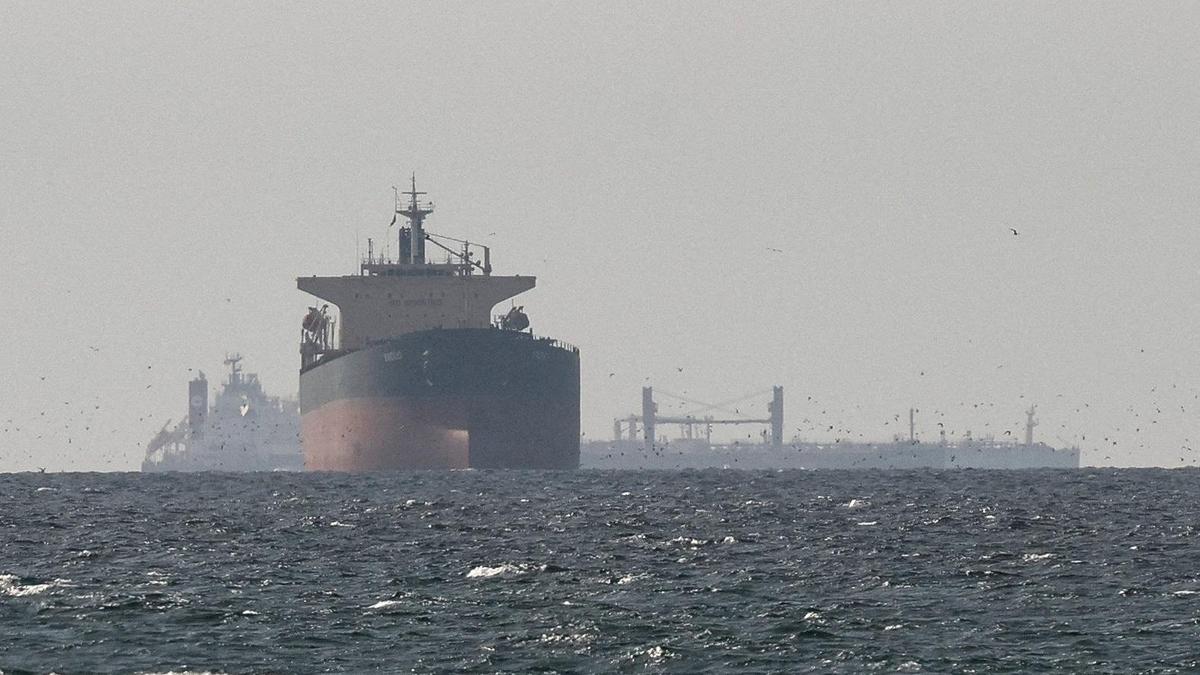
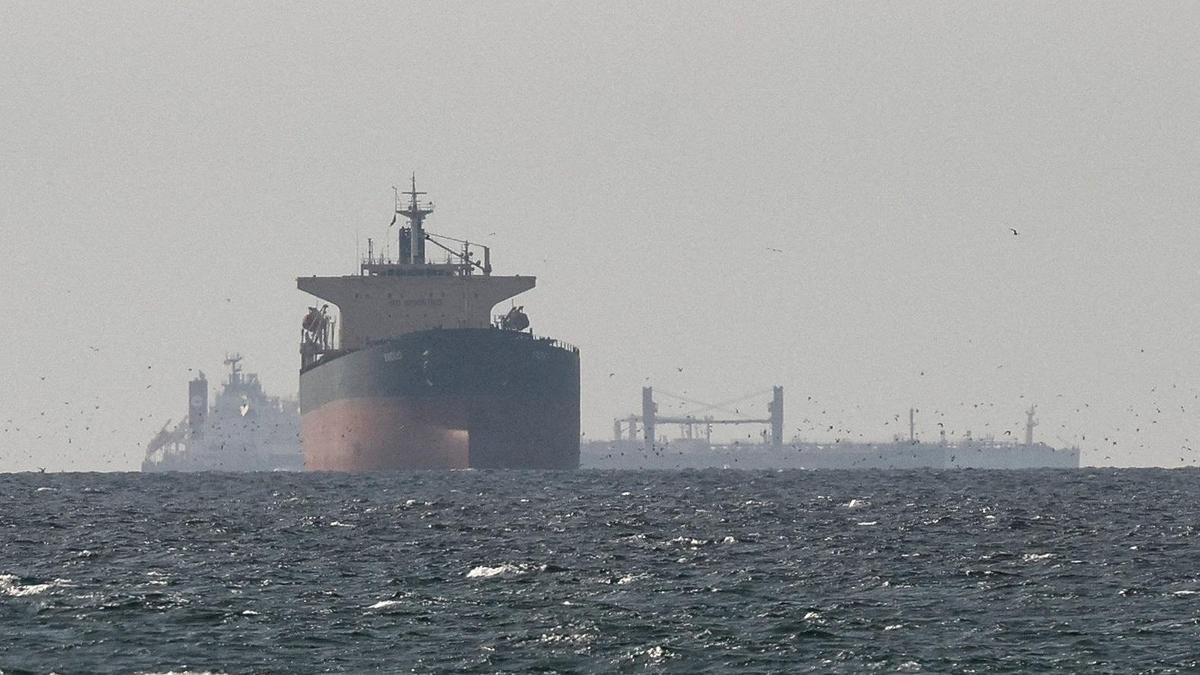
File photo shows tankers sail in the Gulf, near the Strait of Hormuz
| Photo Credit: Reuters
Oil prices climbed on Thursday (March 12, 2026) after Iraqi security officials said Iranian explosive-laden boats had hit two fuel oil tankers amid other global supply disruptions from the U.S.-Israeli war on Iran.
Brent futures rose $5.69, or 6.19%, to $97.67 a barrel at 0118 GMT, and U.S. West Texas Intermediate (WTI) crude was up $5.11, or 5.86%, to $92.36.
Two foreign tankers carrying Iraqi fuel oil were hit by unidentified attackers in Iraq’s territorial waters, causing them to catch fire, the director general of the General Company for Ports, Farhan al-Fartousi, told Reuters on Wednesday (March 11, 2026).
An initial investigation from Iraqi security officials showed explosive-laden boats from Iran had hit the two tankers.
“This appears to mark a direct and forceful Iranian response to the IEA’s overnight announcement of a massive strategic reserve release aimed at cooling runaway prices,” said Tony Sycamore, an IG analyst.
The International Energy Agency agreed to release a record 400 million barrels of oil to help rein in prices that have spiked due to supply shocks from the U.S.-Israeli war on Iran. The U.S. is contributing the bulk of that release — 172 million barrels — from its Strategic Petroleum Reserve.
“The IEA’s release of oil reserves may be only a temporary solution, as disruptions to oil shipments through the Strait of Hormuz and a major production halt in some Middle Eastern countries could cause a long-term supply crunch,” said Tina Teng, market strategist at Moomoo ANZ.
U.S. President Donald Trump said on Wednesday (March 11, 2026) that Washington was in “very good shape” in its war on Iran and that the U.S. was “going to look very strongly at the straits.”
U.S. intelligence indicates, however, that Iran’s leadership is still largely intact and is not at risk of collapse any time soon, according to sources familiar with the matter.
“Oil prices continued to face upside pressure as there were no signs of war de-escalation in the Middle East,” said Teng.
Published – March 12, 2026 08:03 am IST