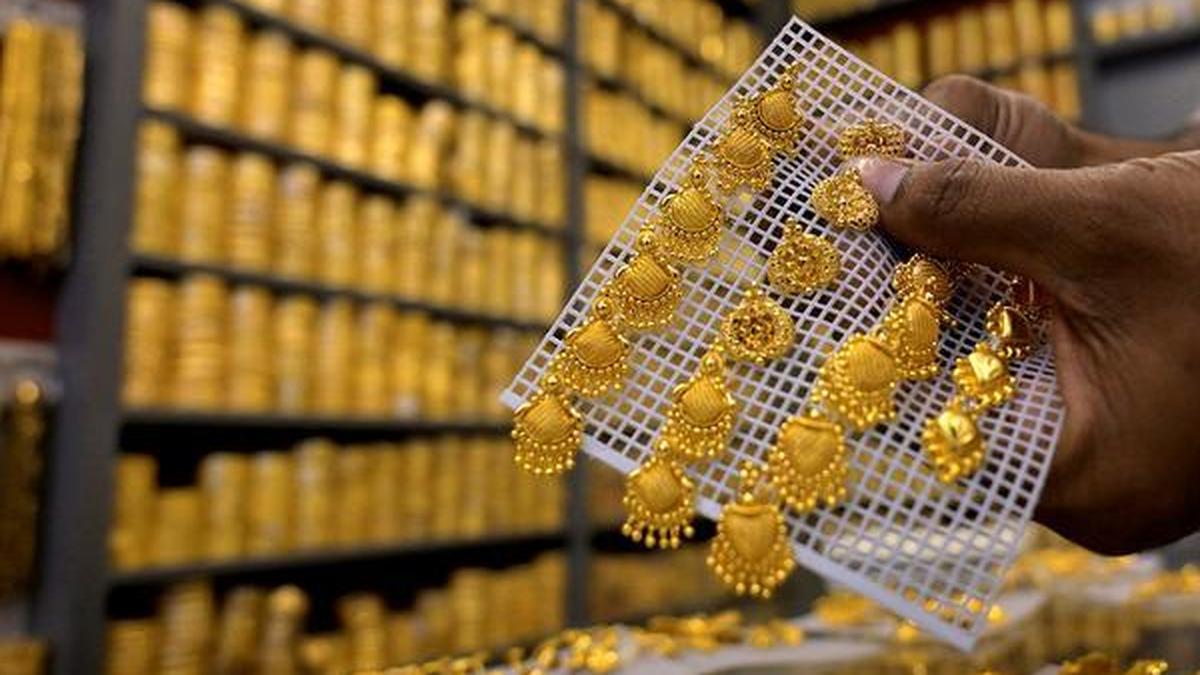
As central banks continue to diversify into non-dollar reserves, with a marked increase in their gold holdings, the gold price is expected to rise further, per an assessment by SBI’s Economic Research Department. They also hinted that Central Banks, especially the US Fed, may go in for gold reserve revaluation as a quick fix for national debt burden.
Since end-August 2025, international gold prices have increased by 47.6% to $5092/Ounce on 06 March 2025, from $3448/Ounce on 29 August 2025.
“Central banks are shifting away from treasuries to gold holdings. The transition happened in June 2025, for the first time since 1996. There has been a marked increase in the gold holdings across the central banks.
“Gold as a percentage of total reserves has risen to as much as 80.4 per cent for the USA and Germany, followed by 79.4% for Italy…India has around 17.6 per cent of its reserves in the form of gold,” said SBI economists.
Gold reserve revaluation, cutting down debt
Soumya Kanti Ghosh, Group Chief Economic Advisor, SBI, opined that an unorthodox attempt that could emerge in the long run is the US revaluing the Federal government’s 261.5 million troy ounces in gold reserves—the largest reserves globally— from a statutory price of $42.22 per troy ounce (fixed in 1973 post Nixon shock) to current market prices ($5000+ per troy ounce).
The corresponding revaluation reserves would create a massive jump in assets first, from current $11 billion value to $1.3 trillion, almost 4 per cent plus of US GDP, wiping 70 per cent of US Budget deficit. This can be quick fix to the US’ astronomical debt burden, currently at $38.8 trillion in debt, Ghosh said.
SBI Research noted that the US Bitcoin Act Sec 9(c) (proposed in November 2025 by Republican Senator Cynthia M Lummis to Congress) also stipulates that Treasury Secretary would revalue gold at market price to purchase one million Bitcoin.
“With the rise in Gold price, the value of reserves on Central Bank balance sheets increases dramatically. When Central Banks revalue their gold holdings, the increased value is reflected as an asset, and often simultaneously increases liabilities to balance the books.
“When Central Banks report their holdings at fair value, the unrealized profits or losses from valuation changes are recorded in “revaluation accounts” on the liability side of the balance sheet, which can be shifted to other parts of the balance sheet to generate funds,” SBI Economists said.
The Economists opined that even though recalibrating the Fed’s gold holdings would enhance its balance sheet (though not reduce its debt directly), a general consensus is more assets should improve America’s fiscal flexibility and financial reputation, making it easier to handle the colossal debt burden.
They cautioned that a Catch-22 could be on the nominal GDP front – if liabilities jump up to balance the ballooning assets, it will exert inflationary pressure and ultimately weaken the GDP.
Published on March 7, 2026