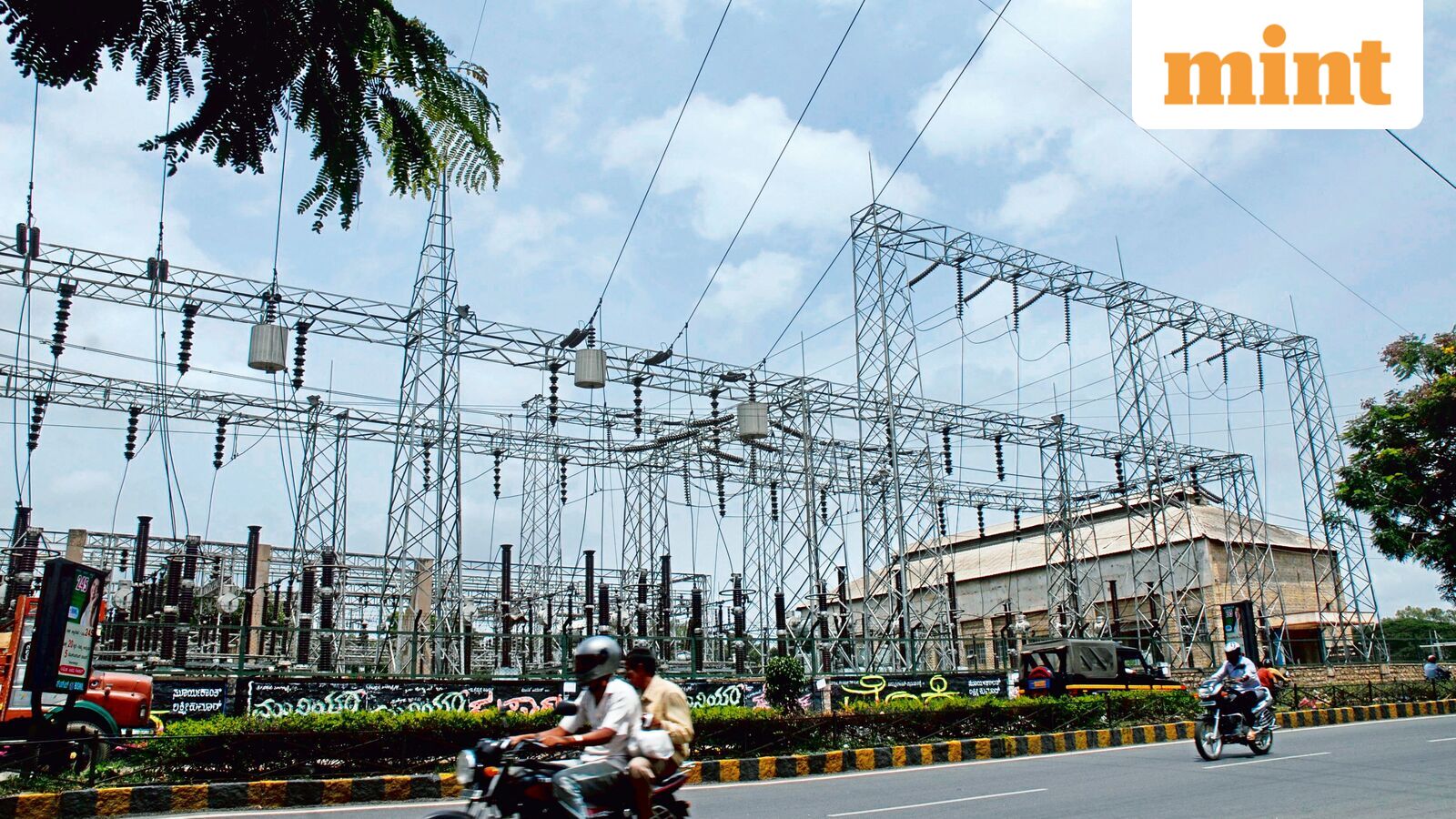
New Delhi: The Union government has allocated ₹18,000 crore in the budget for FY27 for the revamped distribution sector scheme (RDSS) amid a renewed push to reform the power distribution sector. This is an increase from the ₹16,000 crore allocated for FY26, which was later revised to ₹15,671 crore.
Mint earlier reported that the budget is expected to increase the allocation for FY27 to ₹18,000 crore.
The higher allocation comes at a time when power distribution companies (discoms) remain under strain, saddled with cumulative debt of over ₹7 trillion, despite multiple government efforts to bolster their financial health.
Meanwhile, a group of ministers on financial viability of discoms has proposed to incentivize their privatization. The power ministry recently released a draft National Electricity Policy 2026, which proposes a slew of reform measures including mandatory tariff revision and introduction of an index-based automatic annual tariff revision.
Reviving discoms
The RDSS scheme was launched in 2021 with a cumulative outlay of ₹3 trillion to help discoms revive their financial health through implementation of smart meters and other reform schemes by FY26.
However, amid slow progress in the implementation of smart meters, the scheme was extended till FY28. A total of 250 million meters are targeted to be installed under the scheme, out of which only 52.8 million have been set up so far, according to data from the National Smart Grid Mission. Contracts to install about 150 million smart meters have also been awarded.
Last year, Parliament’s standing committee on energy raised concerns over underachievement in the rollout of smart meters, warning that the shortfall had contributed to rising losses at discoms.
In its report on demands for grants for the power ministry, the panel had noted that out of the total of ₹30,065 crore allocated for RDSS during the first four years of the scheme — FY22 to FY25 — about ₹25,664 crore had been utilized as of 10 February 2025. India’s installation of 250 million smart meters is expected to require a cumulative investment of $30 billion.
The RDSS scheme was introduced as the government pushed for universal household electrification. Two earlier programmes for electrification — Pradhan Mantri Sahaj Bijli Har Ghar Yojana (Saubhagya) and Deen Dayal Upadhyaya Gram Jyoti Yojana (DDUGJY) — had ended in 2022.
A report by Prayas (Energy Group), a non-profit organization focused on public interest in the energy sector, in August last year, had said that nationwide rollout of smart meters under the RDSS programme requires significant investments which, if managed well, can deliver both direct and indirect benefits to discoms and consumers.
Large digital transition
“The deployment of smart meters under RDSS is one of the largest digital transitions in India’s electricity sector. Its success, however, will hinge not only on the technology, AMISP: Advanced Metering Infrastructure Service Provider capacity and discoms’ performance improvement, but also on how transparently the associated costs and benefits are accounted for and managed,” it said.
RDSS has two elements—financial support for prepaid smart metering and system metering, and upgradation of the distribution infrastructure.
The scheme’s ₹3 trillion outlay includes expenditure by the Centre and states, besides financing from state-owned power sector lenders like Power Finance Corp and REC Ltd. The Centre alone plans to spend a total of over ₹97,000 crore on the scheme.
Over the years, Centre has developed with a number of initiatives for revival of discoms including the Accelerated Power Development and Reform Programme (APDRP) and Ujjwal Discom Assurance Yojana (UDAY) which were in effect before the ongoing RDSS.
The power ministry last month said that after over a decade, India’s power distribution sector returned to profits on a cumulative basis. For FY25, the discoms reported a net profit of about ₹2,701 crore, compared to a loss of ₹25,553 crore in FY24. The ministry, in a statement, attributed this recovery to the reform measures including the RDSS programme.
The RDSS scheme also aims to reduce AT&C losses to pan-India levels of 12-15% by 2024-25. Although the deadline for bringing the AT&C losses to targeted levels could not be met, the losses in FY25 stood at 15.04%, compared to 17.6% in FY24, according to recent power ministry data.
Similarly, the target of eliminating the gap between the average cost of supply and average revenue realized (ACS–ARR) by FY25 has not been met. As of the end of the last fiscal, the gap had narrowed to 6 paise per unit, from 48 paise in FY24.