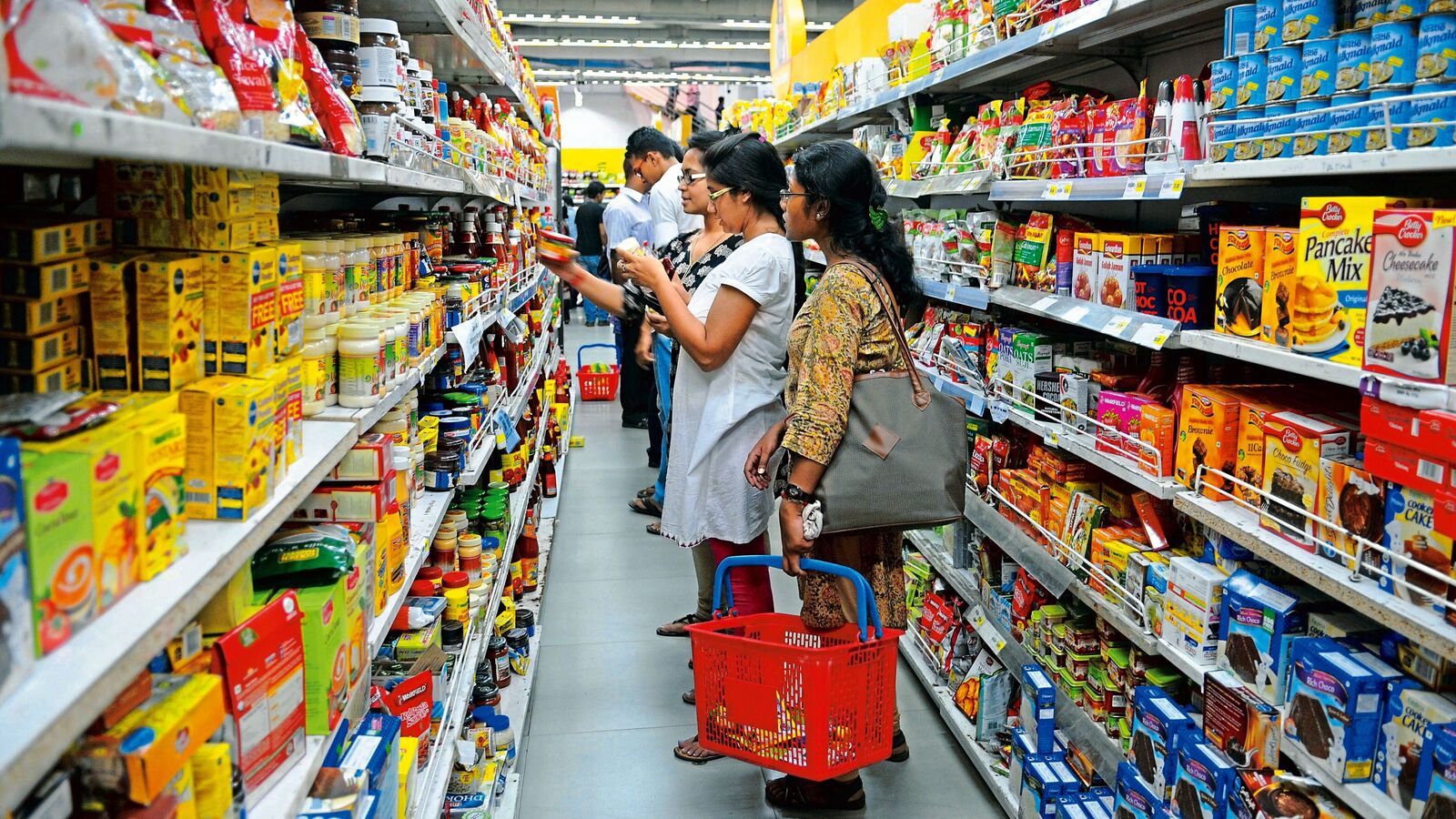
Budget 2026 sectoral expectations — FMCG industry: India’s fast moving consumer goods (FMCG) sector has high expectations from Finance Minister Nirmala Sitharaman’s Budget tomorrow. Among the most stated expectations and suggestions include rationalised customs duties, GST inverted duty structure, measures for increasing disposal income, support for startups and logistics, innovation push and more.
Nikhil Doda, Co-Founder and COO of Lahori Zeera, an Archian Foods brand, noted that after the GST reduction, most items now fall under the 5% slab, which makes it difficult for brand owners, as conversely, most services are subject to higher GST and ineligible for input tax credits. He also pointed that GST incurred on purchasing machines is higher, and since the output tax slab is lower, it cannot be used fully, leading to “continuous accumulation of credits, increasing working capital requirements and the overall cost of conversion”.
“We expect the Budget to focus on boosting rural and semi-urban demand through higher allocations towards infrastructure development, agriculture, and employment generation. Increased disposable income in these regions directly translates into higher consumption for mass-market FMCG,” he added.
Further, Doda noted that support for MSMEs remains crucial.
However, Pankaj Pandey, head of research at ICICI Securities cautioned that while defense and railways may see get more allocations, there could be limited new measures to boost consumption. “The government has, over the past year, engaged in front-loading, reducing personal income tax rates and rationalising GST rates to boost consumption. With limited fiscal room, we don’t expect any new measures to accelerate consumption. Minor tweaks to personal income taxation cannot be ruled out within the broader aim of shifting individuals from the old to the new tax regime,” he added.
Guideline for India: What did Economic Survey state?
Tabled in Parliament ahead of Budget, the Economic Survey document sets the tone for India’s economic approach and provides a snapshot of the government’s assessment of the economy. The document this year was tabled by Sitharaman before both houses of Parliament on 29 January (Thursday).
Economic Survey 2026 projected FY26 growth at 7.4% as per the first advance estimates released earlier this month. While stating that the Indian economy is expected to expand at 6.8-7.2% in FY27, supported by strong macro fundamentals and a series of regulatory reforms, as per the Economic Survey 2025-26.
It also projected real GDP growth in FY27 in the range of 6.8 to 7.2%. “The outlook, therefore, is one of steady growth amid global uncertainty, requiring caution, but not pessimism,” it stated.
What did the FMCG sector get in Budget 2025?
- In the previous Budget, Sitharaman announced changes to the income tax slabs, with income up to ₹12 lakh becoming tax-free.
- Effectively, for salaried individuals with standard deduction, the tax-free income limit was raised to ₹12.75 lakh.
- The measures were aimed at boosting disposable income and allowing room for consumption growth.
- Further, announcement of the Dhan Dhanya Krishi Yojna and a focus on high-yield seeds by the finance minister envisioned boost to farmer income and enhancement in rural consumption.
Overall, Budget 2025 revised FY25 fiscal deficit to 4.8%, with fiscal deficit target for FY26 at 4.4%. For FY25, the revised estimate for total receipts (excluding borrowings) stood at ₹31.47 lakh crore, with net tax receipts at ₹25.57 lakh crore. The revised estimate for total expenditure was ₹47.16 lakh crore, including ₹10.1 lakh crore of capex.
FMCG sector expectations from Budget 2026
Organised retail is expected to grow within the next two or three years by 15–18% every year, with private labels being at a rate of over 20% CAGR, as per Ashish Pandey, Director and Co-Founder of BuyBuyCart. He added that daily essentials, personal care, and home category products account for about 10–12% of organized retail sales at present, and they are very likely to double their share at least by 2027.
- Pandey recommends easier institutional credit access for franchise partners, GST on private-label and essential goods rationalisation, incentives for local sourcing and packaging, and small-format retailers facing fewer compliance issues, to enhance the retail backbone of India.
- Cassio Simões, MD of Tetra Pak South Asia noted that the Budget can act “as a catalyst for systemic and sustainable change in the packaging industry”. He believes that by focusing on healthier FMCG products and sustainable solutions in packaging, the government can play a pivotal role in strengthening India’s food processing and sustainability landscape. “Incentivisation and an inclusive framework will empower the FMCG sector to innovate, adopt sustainable solutions and ensure that ‘Safe and Sustainable’ becomes the standard, across the value chain,” he added.
- Further, Prashant Peres, General Manager, India at Mars Snacking noted that with GST rationalisation underway and consumption firmly back in focus. “Consumption growth will depend significantly on how effectively the Budget lifts middle-class spending capacity. The industry is also looking for meaningful support to manage input-cost volatility, particularly in categories impacted by inverted duty structures under GST, which lock up working capital and add to cost pressures for manufacturers.” Peres called for policy to move beyond commodity exports to high-quality, market-ready products. “Measures that improve ease of doing business, encourage food innovation, and strengthen processing and supply-chain infrastructure can help accelerate this transition and position India as the world’s food basket,” he added.
- Paritosh Ladhani, Joint MD of SLMG Beverages (independent Coca-Cola bottler) said he is looking forward to bold measures that will ramp up India’s manufacturing and domestic production ecosystem under Atmanirbhar Bharat. He expects: Continued emphasis on industrial corridors, enhanced connectivity, more ease-of-doing-business reforms to attract global investments, global supply chain integration, rationalisation of GST slabs, incentives for sustainable and eco-friendly packaging, targeted measures to boost rural incomes to unleash potential across tier-2, tier-3 cities and rural markets.
- Anjana Ghosh, MD of Scale Sherpas noted that while last year’s Budget was largely centred around fiscal consolidation, capex growth, and infra development, for 2026, the expectation is a sharper pivot towards reviving consumption and boosting disposable incomes, particularly in rural and semi-urban India, which contributes nearly 60% of FMCG demand. “Targeted measures to support employment generation and skill development are critical … accelerating digital and logistics enablement for kirana stores (account for close to 90% of FMCG sales), rationalising GST structures, and continuing ease-of-doing-business reforms will further help emerging and challenger brands grow sustainably,” she added.
- Mahesh Ravaria, ED of Beauty Garage called for focused incentives. “A simplified roadmap within the ‘Make in India’ initiative, with rationalised customs duties on critical materials and ingredients, coupled with the GST inverted duty structure, will provide homegrown brands with the liquidity to invest in R&D and future-ready technology,” he feels.
Disclaimer: The views and recommendations made above are those of individual analysts or broking companies, and not of Mint. We advise investors to check with certified experts before making any investment decisions.