The emphasis, one official said, is not only on tourism promotion but also on enabling adventure tourism to deliver a steady income to states.
Revenue generation is a key driver behind the proposed approach. By integrating adventure tourism hubs with existing tourism circuits, the government expects to lengthen tourist stays, raise per-visitor spending and help states monetize natural assets without resorting to large-scale construction and urban expansion.
The development assumes significance given that, despite strong domestic demand and growing global interest, India’s adventure tourism sector remains fragmented. States like Uttarakhand, Himachal Pradesh, and Jammu and Kashmir, among others, have emerged as natural hubs, but the absence of consistent national standards has restricted the sector’s ability to scale and convert natural advantages into sustained economic returns.
With this in mind, the annual financial statement for FY27 may also signal framing national standard operating procedures for adventure tourism activities. The outlay will be spread across initiatives like infrastructure, safety, and capacity-building to position adventure tourism as a scalable economy, not just a niche or seasonal activity, said the second official.
India recorded 20.57 million international tourist arrivals in 2024, according to the tourism ministry’s India Tourism Data Compendium in 2025. Tourism receipts rose to $35.02 billion ( ₹2.9 trillion) in the year, giving India a 2.02% share of global tourism receipts and placing it 15th globally in tourism earnings.
Domestic tourism continued to be the backbone of the sector, with 2,948 million domestic tourist visits in 2024, marking a 17.5% increase over 2023, the data showed.
Provisional data released by the tourism ministry in September 2025 showed that India recorded about 5.6 million foreign tourist arrivals and 3.0359 billion domestic tourist visits up to August 2025, indicating continued momentum in both inbound and domestic travel.
Key Takeaways
- A ₹500 crore outlay is likely to be proposed for tourism schemes in the Budget.
- Move from advisory guidelines to enforceable national SOPs to de-risk the sector for investors.
- Focus on high-yield models to help states monetize geography without heavy construction.
- Projections suggest the Indian adventure tourism market could reach $46.73 billion by 2030.
- The sector is eyed as a key job creator, building on the 84.6 million tourism jobs recorded in 2023-24.
National standards
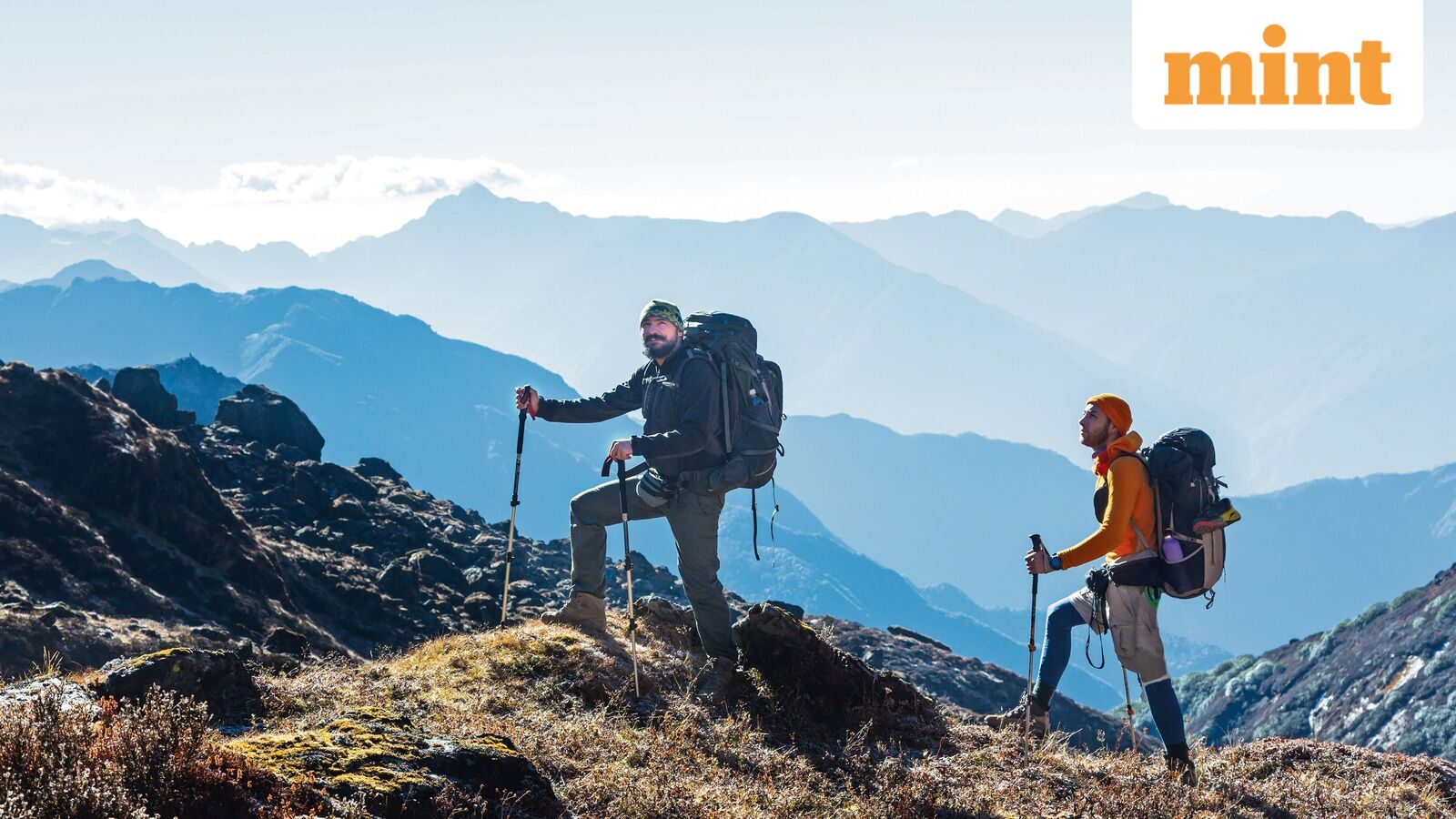
The government is looking at developing adventure tourism destinations in a phased manner across states, using India’s diverse geography from the Himalayas and the Northeast to coastal regions, deserts and forest belts. States may be encouraged to treat adventure tourism as a focused economic cluster rather than a seasonal activity.
“The proposed schemes are expected to support such destination development,” said one of the two government officials cited above, requesting anonymity.
It is expected that the Budget may propose the formulation of SOPs (standard operating procedures) to lay down uniform safety norms, certification requirements for operators and guides, equipment standards, insurance coverage and emergency response protocols, said the second official. “This is a step seen as critical for improving investor confidence and reducing liability-related risks. The lack of such uniformity has so far prevented adventure tourism from attracting institutional and foreign capital despite strong demand,” he added.
In the Union Budget 2025-26 (FY26), the government allocated ₹2,541.06 crore to the tourism ministry to support infrastructure, skill development and travel facilitation across the sector.
Queries emailed to the spokespersons of the ministries of finance and tourism on Friday remained unanswered till press time.
Industry veterans say India’s natural diversity gives it an opportunity to emerge as a global leader in the sector.
Ajeet Bajaj, a pioneer for Indian adventure sports and managing director of Snow Leopard Adventures, said that adventure tourism was already one of the fastest-growing travel segments globally before the pandemic, valued at about $683 billion. Younger travellers drive growth, with higher spending per visitor than in conventional tourism.
Creating employment
Adventure travellers typically spend around $3,000 per trip, a pattern that industry experts say tends to result in higher overall expenditure than average leisure travel, according to research conducted by the Adventure Travel Trade Association (ATTA).
Bajaj said that India’s natural diversity offers a rare opportunity to emerge as a global leader in the sector if safety, infrastructure, and policy clarity are addressed together. Adventure tourism alone could potentially double India’s inbound tourist numbers over the next five years and support sustainable development in remote regions.
India’s inbound tourism has seen strong post-pandemic recovery, according to data from the tourism ministry released in December 2025. International Tourist Arrivals rose from 6.337 million in 2020 to 7.010 million in 2021, before more than doubling to 14.330 million in 2022, increasing further to 18.899 million in 2023 and 20.569 million in 2024, surpassing pre-pandemic levels.
Foreign exchange earnings from tourism mirrored this trend, falling from ₹2.16 trillion in 2019 to ₹95,738 crore in 2020 and ₹63,978 crore in 2021, before rebounding to ₹1.69 trillion in 2022, ₹2.66 trillion in 2023 and ₹2.93 trillion in 2024.
The recovery also translated into job creation, with tourism employment rising from 68.07 million in 2020-21 to 84.63 million in 2023-24, based on Periodic Labour Force Survey estimates, underscoring the sector’s role as a major employment generator.
The Adventure Tour Operators Association of India (ATOAI), a national industry body representing adventure tourism operators, has, in recent months, asked for improving trekking access in border regions, expanding regulated desert tourism in Western Rajasthan, and enabling the carriage and use of satellite-based safety and distress devices, among others.
High potential
If adventure tourism is to be genuinely prioritized in the Budget, government support must address structural gaps that limit the sector’s ability to scale beyond a handful of destinations, said Arshdeep Anand, vice president of ATOAI. “Focused investment is needed in adventure tourism infrastructure across the Himalayas and other high-potential regions,” he added.
The adventure tourism market in India is experiencing rapid growth, with projections indicating it will reach $46.73 billion in revenue by 2030, expanding at a compound annual growth rate (CAGR) of 19.1% from 2025 to 2030, as per the India Brand Equity Foundation, under the commerce ministry.
Service Export Promotion Council chairman Abhay Sinha said that tourism, particularly adventure tourism, has the potential to emerge as a high-yield economic sector for states if it is backed by clear regulations, safety standards and investable infrastructure.